Where People Go Wrong
Most of the trouble we see starts with a mismatch between the opener and the house it's bolted to. A lot of Stamford garages were built when the median home here went up - 1968, per the housing data - and that means original wiring runs, undersized outlets, and junction boxes that were never meant to carry a modern opener's draw plus a battery backup trickle-charger. Homeowners add a Wi-Fi-enabled opener to a circuit that was sized for a single incandescent bulb and a chain-drive motor, and then wonder why the breaker trips every time the compressor in the fridge on the same line kicks on.
The other common mistake is treating the battery backup as a one-time purchase. It's not. In a house built in that 1955-1984 window, the garage is often an unheated or marginally heated space, and backup batteries sitting in an unconditioned garage degrade faster than the sales literature suggests. People install one, forget about it, and find out it's dead the first time the power actually goes out - which in this area usually means winter, when they need the door to move most.
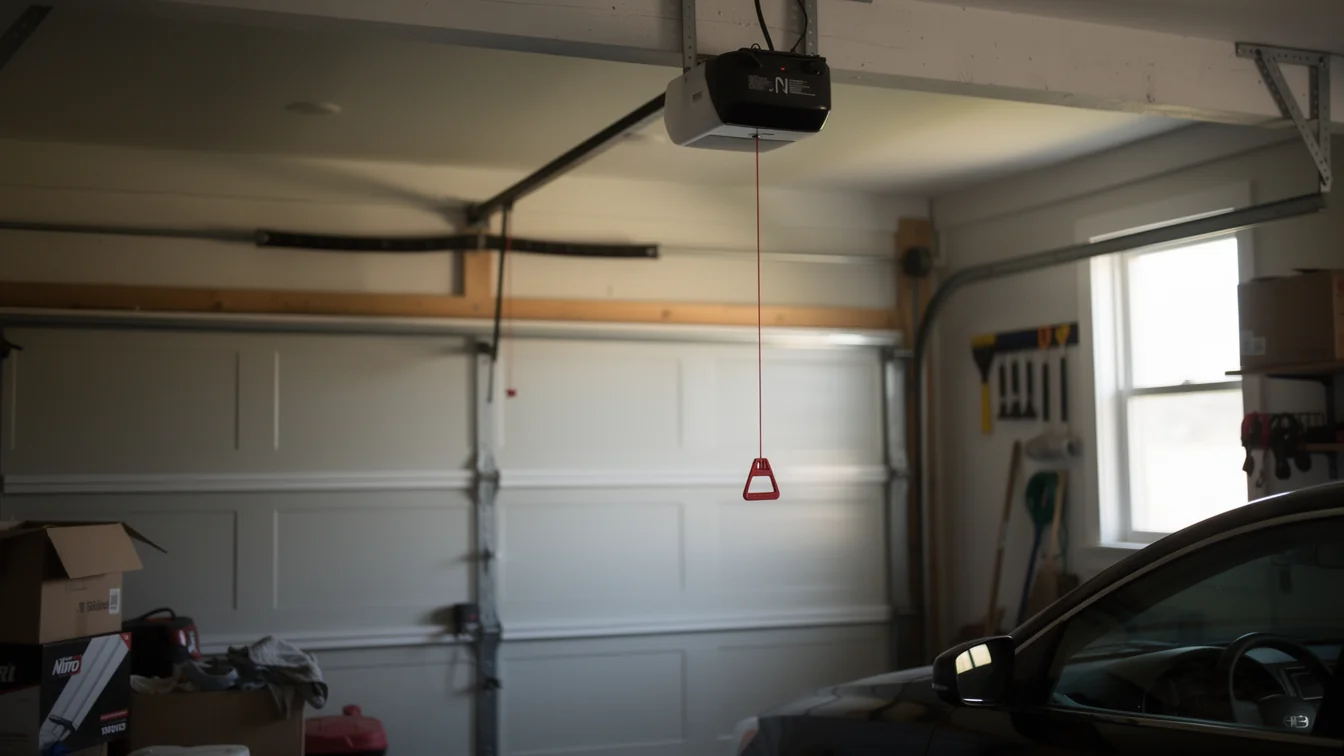
We also see people skip the manual release entirely. If you've never pulled the red cord and lifted the door by hand, a power cut at 6am on a work day is the wrong time to learn how.
How Local Conditions Play In
Stamford sits in a cold, severe climate band, and that matters more for openers than people expect. Cold doesn't just slow a chain down - it drops battery capacity hard. A backup battery that holds a charge fine in September can lose a third of its usable capacity on a 20-degree night, right when an ice storm is also the thing knocking out your power. That combination - cold snap plus outage - is exactly when the opener's backup gets asked to do its one job, and exactly when it's least able to.
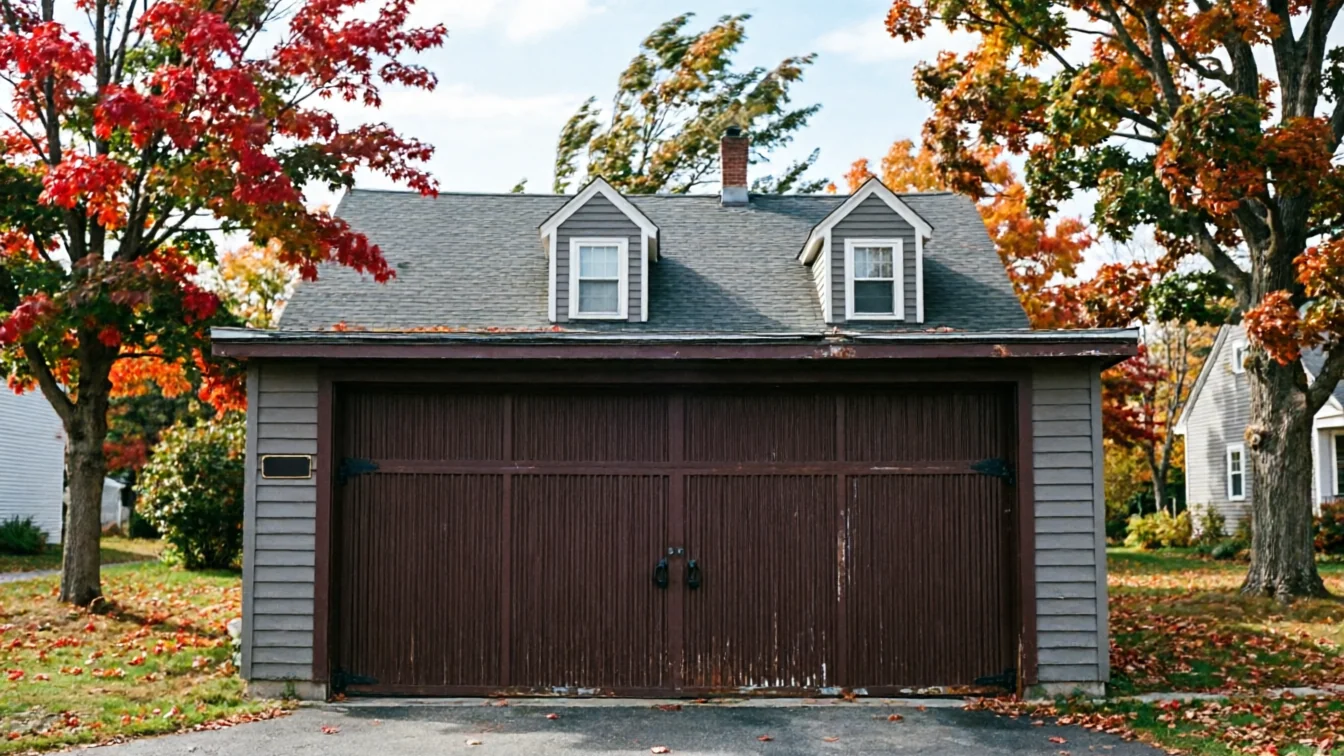
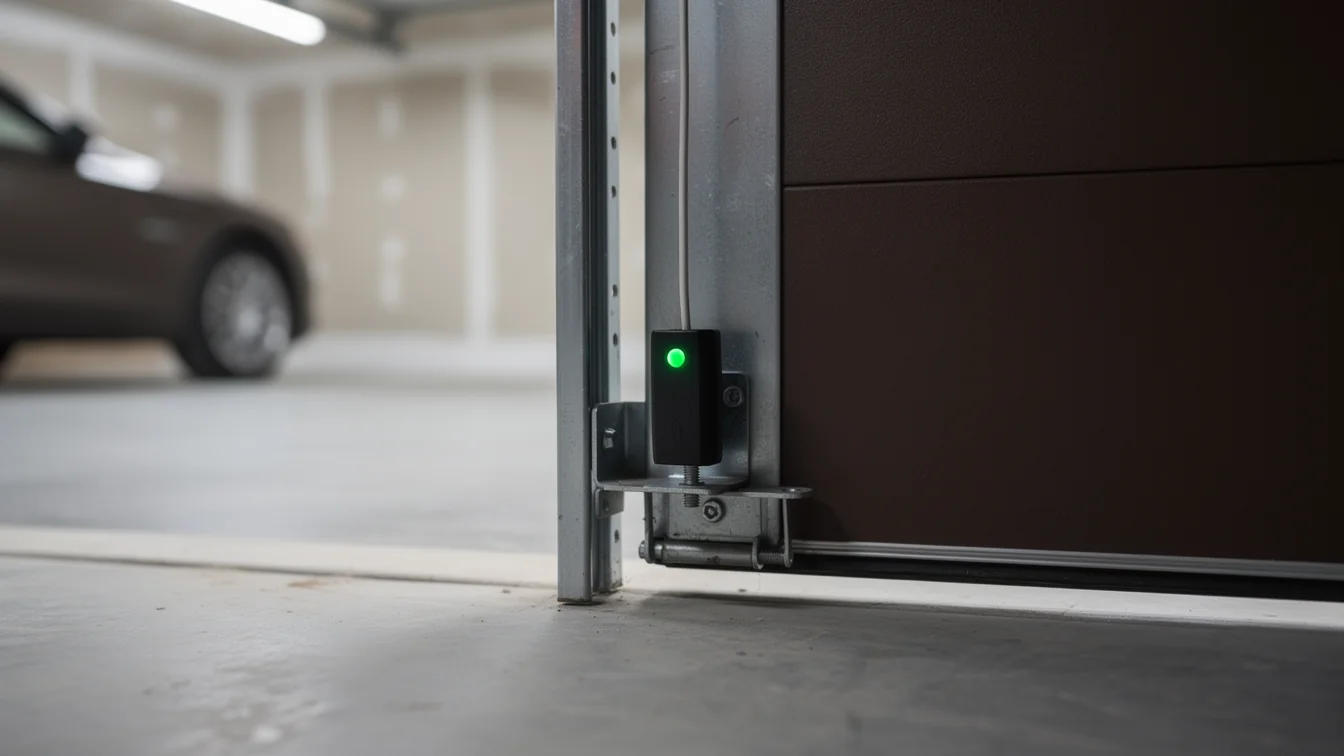
Houses across the older sections of the service area - the 1960s and 70s stock that makes up most of what's here - also tend to have garages on exterior walls with less insulation than a newer build. The opener unit itself sits in that cold air all winter, and the grease inside the gear housing and the sensor alignment both drift slightly as temperatures swing. We see more false error codes and more sensor misalignment calls in January and February than any other time of year, and it's rarely a coincidence.
When to Call Someone
Call if the opener runs but the door doesn't move - that's almost never a power problem and almost always a stripped gear or a disconnected trolley, something a reset won't fix. Call if the battery backup light is blinking or amber for more than a day; that's the unit telling you it's not holding charge, and in a cold garage that failure accelerates fast.
Don't call us for a dead remote battery - swap the coin cell first, it solves it more often than people expect.
If your whole house loses power and the garage door won't open even with the manual release pulled, stop and check whether the door is simply stuck on its tracks from cold-stiffened rollers before assuming the opener's at fault. That's a mechanical issue, not an electrical one, and it changes what we need to bring to the job.
What Is Going On
What's actually going on in most of these calls is three things stacked on top of each other: a 50-to-70-year-old electrical setup, a backup battery asked to perform in weather it wasn't rated well for, and an opener that's been running since before smart-home add-ons were common. None of those three is a crisis on its own. Together, during a winter outage, they add up to a door that won't move when you need it to.
We don't rewire houses, and if what you need is a dedicated circuit run to the garage, that's an electrician's job, not ours - we'll tell you straight if that's the fix instead of pretending a new opener solves a wiring problem. What we do handle is matching the opener and backup system to what a Stamford garage actually experiences over a winter, not what a spec sheet assumes.
Talk to a local pro
Garage door trouble in Stamford?
Same-day service with honest, upfront quotes.