Fast garage door repair in StamfordCall (475) 203-3812

Stamford, CT

Garage Door Service for Stamford's 1960s and 70s Housing Stock

Stamford homes built 1955-1984 bring specific spring and track failures in cold winters. See why service calls here differ from newer construction elsewhere.

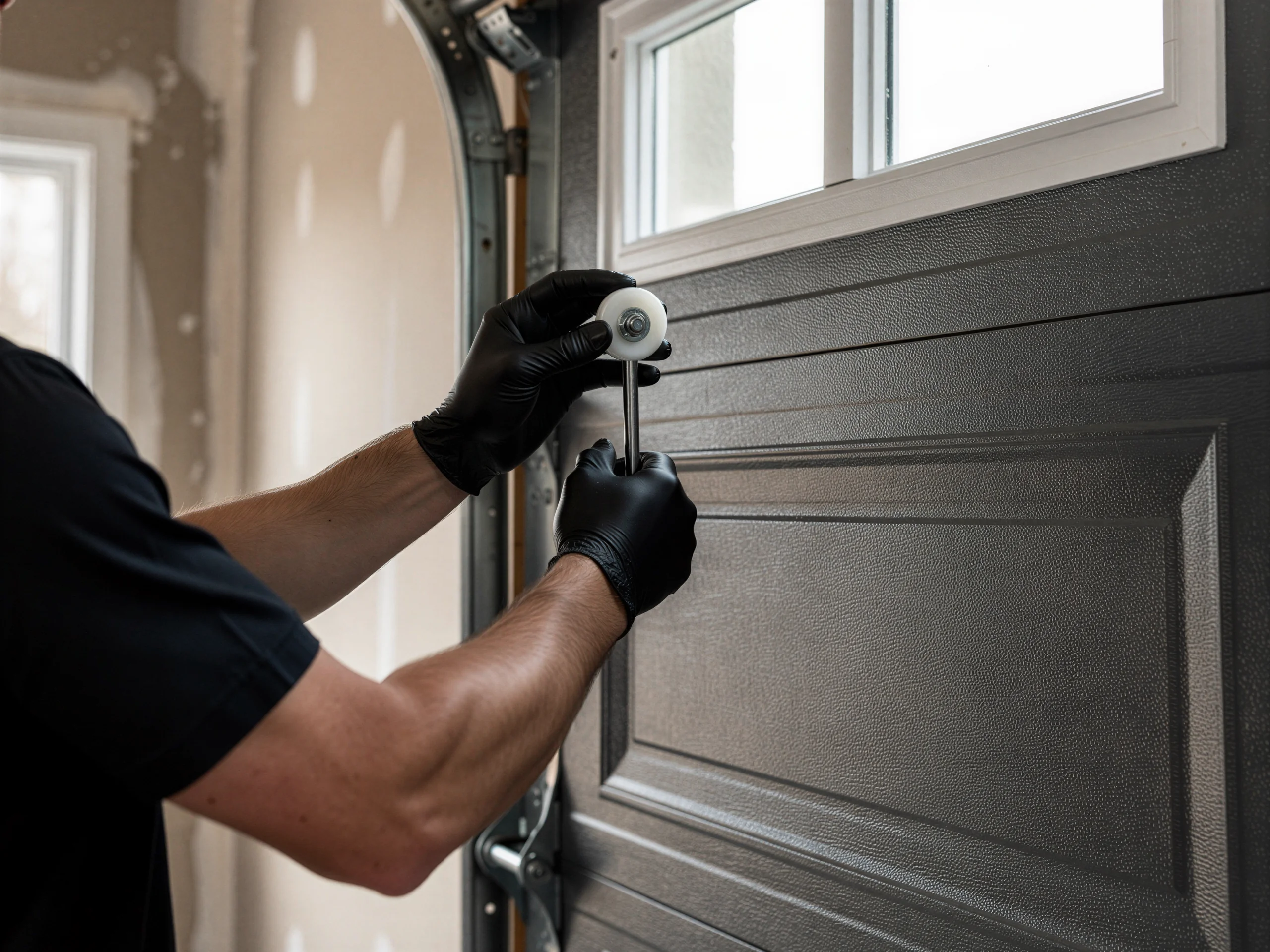
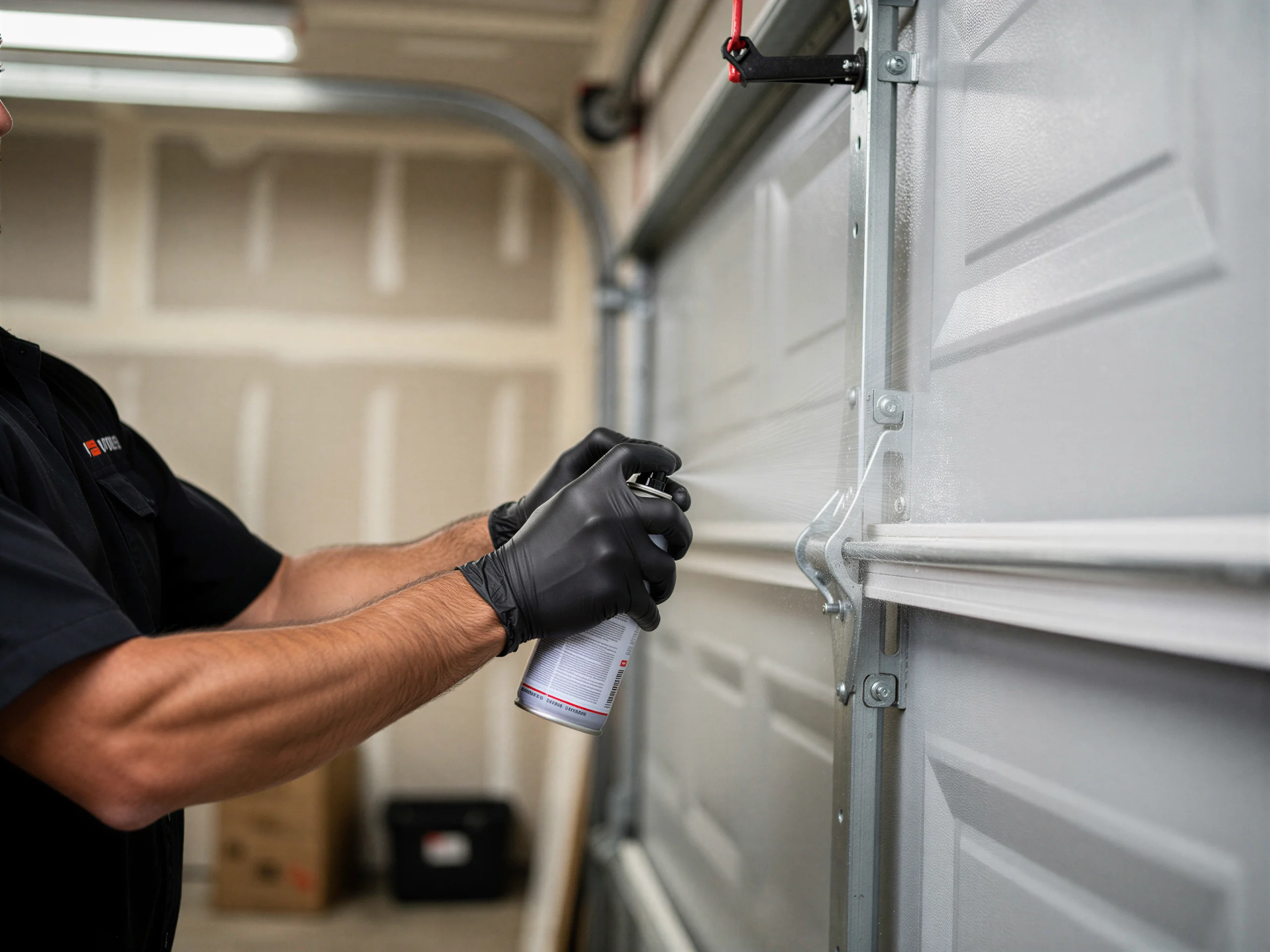
A technician in black gloves sprays lubricant on a white garage door hinge.
Serving Stamford, CTBackground-checked techsHonest, upfront pricingFast local response
Local
Crews that work this area daily
Same-day
Response for most repair calls
Upfront
Pricing agreed before we start
Insured
Background-checked technicians

Watch-outs

Where This Job Goes Sideways

Most calls we get in Stamford start the same way: a door that worked fine last week now grinds, sticks, or won't budge at all.

Build-era bracket mismatch

The reason comes down to age. Housing across Stamford's 16 named areas - from Springdale to Cove-East Side-Shippan - mostly went up between 1955 and 1984, with a median build year around 1968. That means a lot of original or first-replacement hardware still bolted to the same jamb it was installed on decades ago.

Bracket and opener mismatch

Where it goes sideways is the mismatch between old brackets and newer openers homeowners have bought at the hardware store. The bracket flexes, the opener forces the door anyway, and something gives - usually a cable or a roller, sometimes the whole track pulls away from the header.

Tract-home bracket spacing

We see this more in the 1960s-70s tract construction that makes up most of the service area than in anything built after 1990, because the lumber sizing and bracket spacing from that era just wasn't engineered for 1/2 horsepower chain drives. The other common failure is a torsion spring that's simply outlived its cycle count. Nobody tracks install dates on these, so by the time it snaps, it's been wound tight for 15 or 20 years.

Local causes

Why This Fails Locally

Stamford sits in a cold, severe winter climate band, and that matters more for garage doors than people expect. Steel contracts in deep cold, and on a door hung from 1960s-era track with decades of paint buildup and dried-out rollers, that contraction is enough to bind a track that was already slightly out of plumb. You get a door that opens fine in August and chatters or jumps the track in January.

The age of the housing stock compounds this. A door and opener combination original to a 1968-built house has outlived its lubrication, its weatherstripping, and often its spring by a wide margin. Cold makes brittle rubber crack and makes a tired spring more likely to let go under load, because the steel itself gets less forgiving at low temperatures. This isn't a failure you'd expect to see as often in warmer climate zones, or in neighborhoods built within the last 15 years with code-correct bracket spacing and insulated steel doors from the start.

We're not saying every door from this era is a ticking clock. Plenty have been maintained and run fine. But if nobody's touched the spring tension or track alignment since the Nixon administration, cold is what finally exposes it.

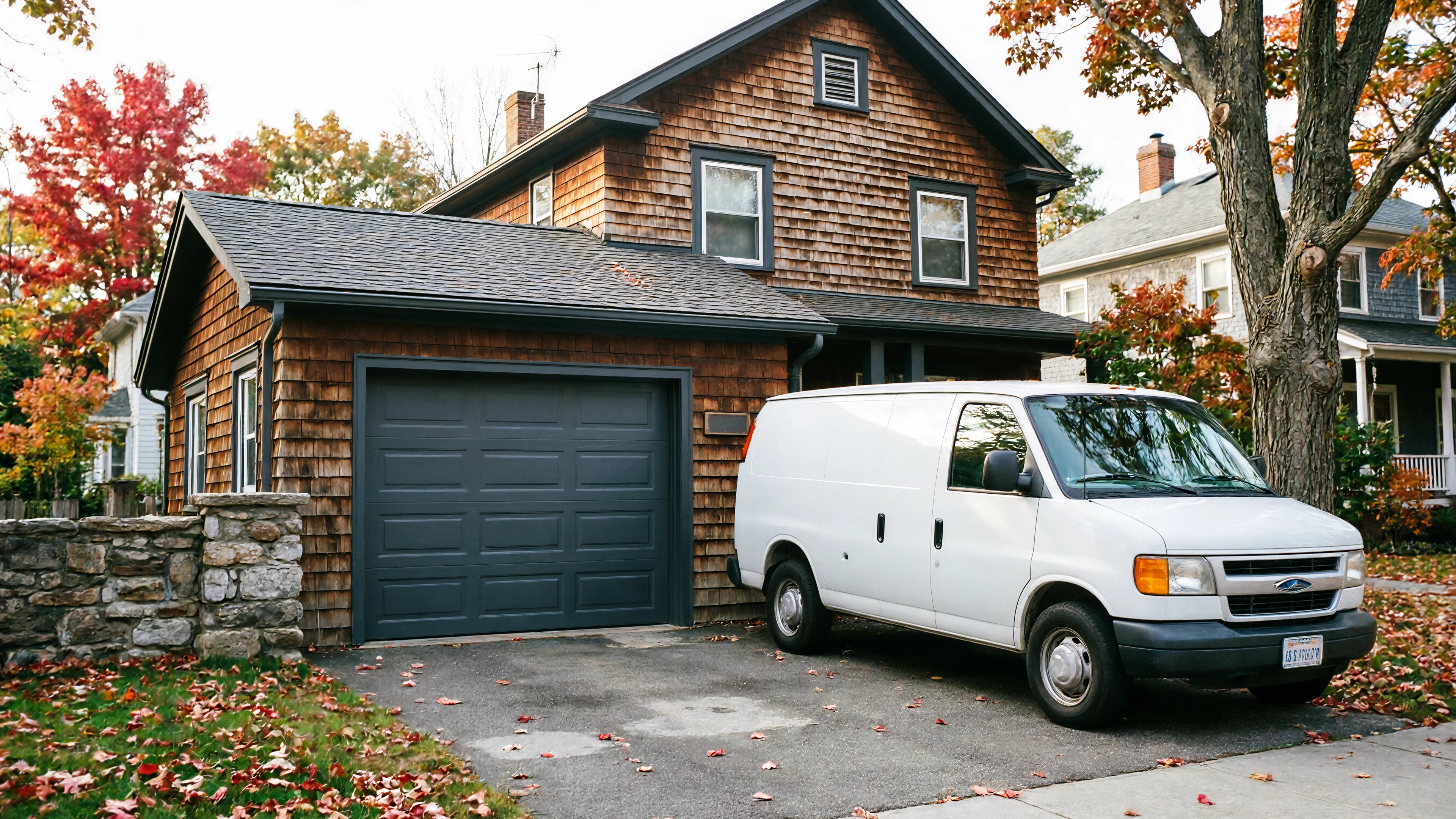
A white service van is parked in the driveway of a house with a dark gray garage door.

Pricing

What It Costs

We're not going to list prices here that don't match the actual job in front of us - a spring replacement on a single door is a different job from a full track realignment with bent rail, and quoting one number for both would be misleading.

Cost drivers by job type

What we can tell you is what drives the cost: whether it's a spring-only fix or a track-and-bracket job, whether the opener itself needs attention, and whether the hardware on your door is a standard size or something non-standard left over from an older build.

Uniform pricing across areas

Stamford's median household income runs well above the national figure, and we price the same job the same way regardless of which of the 16 areas you're in - Downtown, North Stamford, Riverside, it doesn't change what parts or labor the fix takes.

Parts availability delays

What does change the number is parts availability. Original hardware from a 1960s or 70s installation sometimes isn't a stock item anymore, and sourcing a matching bracket or track section can add time to the job rather than cost - we'll tell you upfront if that's the situation before we start.

Warning signs

How It Shows Up

The earliest sign is usually noise - a grinding or popping sound when the door travels, especially in the first cold snap of the season.

Roller binding in tracks

That's often a roller binding in an out-of-true track, the kind of wear that builds slowly in houses that have had the same hardware since the 60s or 70s. Next is the door that reverses itself partway up, or stutters instead of moving smoothly. That's frequently a spring that's lost tension unevenly, putting more load on one side of the door than the other.

Mid-travel door tilt

On older torsion setups common across Stamford's housing stock, this shows up as a visible tilt when the door is halfway open. The worst version is no warning at all - a loud bang as a spring lets go, usually first thing on a cold morning when the steel is least forgiving.

Disconnect before forcing manually

If that happens, don't try to force the door open manually with the opener still engaged; disconnect it first. We'd rather walk you through that over the phone than have you find out the hard way what a broken spring under tension can do to a hand.

Questions

Common questions

Why does my garage door only act up in winter?

Steel track and springs contract in cold weather, and on hardware that's already decades old - common across Stamford's 1960s and 70s housing stock - that contraction is often what finally exposes a worn roller, a slightly bent rail, or a spring near the end of its life. The fault was building for years; winter just reveals it.

Is my garage door opener too old to repair?

It depends on the part that failed. If it's a logic board or motor on a unit original to a house built in the 1960s or 70s, parts can be hard to source, and replacement may cost less than hunting down discontinued components. We'll tell you which situation you're in before we start any work.

How do I know if it's the spring or the track?

A door that reverses itself partway up or looks tilted when half open usually points to a spring that's lost tension unevenly. Grinding or popping noises during travel usually point to a roller or track issue. Both are common on hardware original to Stamford's older housing stock.

Ready when you are

Need a garage door sorted in Stamford?

Stamford Garage Door Pros repairs and installs garage doors, springs and openers in Stamford, CT and the surrounding area.

CallGet a quote