
Leave spring work alone
That's not a sales line, it's the actual risk, and it's the one repair on this list we'd tell you to leave alone no matter how handy you are.
Darien, Stamford
Darien homes built around 1957 still run original torsion hardware. We drive 4 miles from Stamford to fix springs, openers, and tracks on doors that age has caught up with.
Popular Services
Local causes
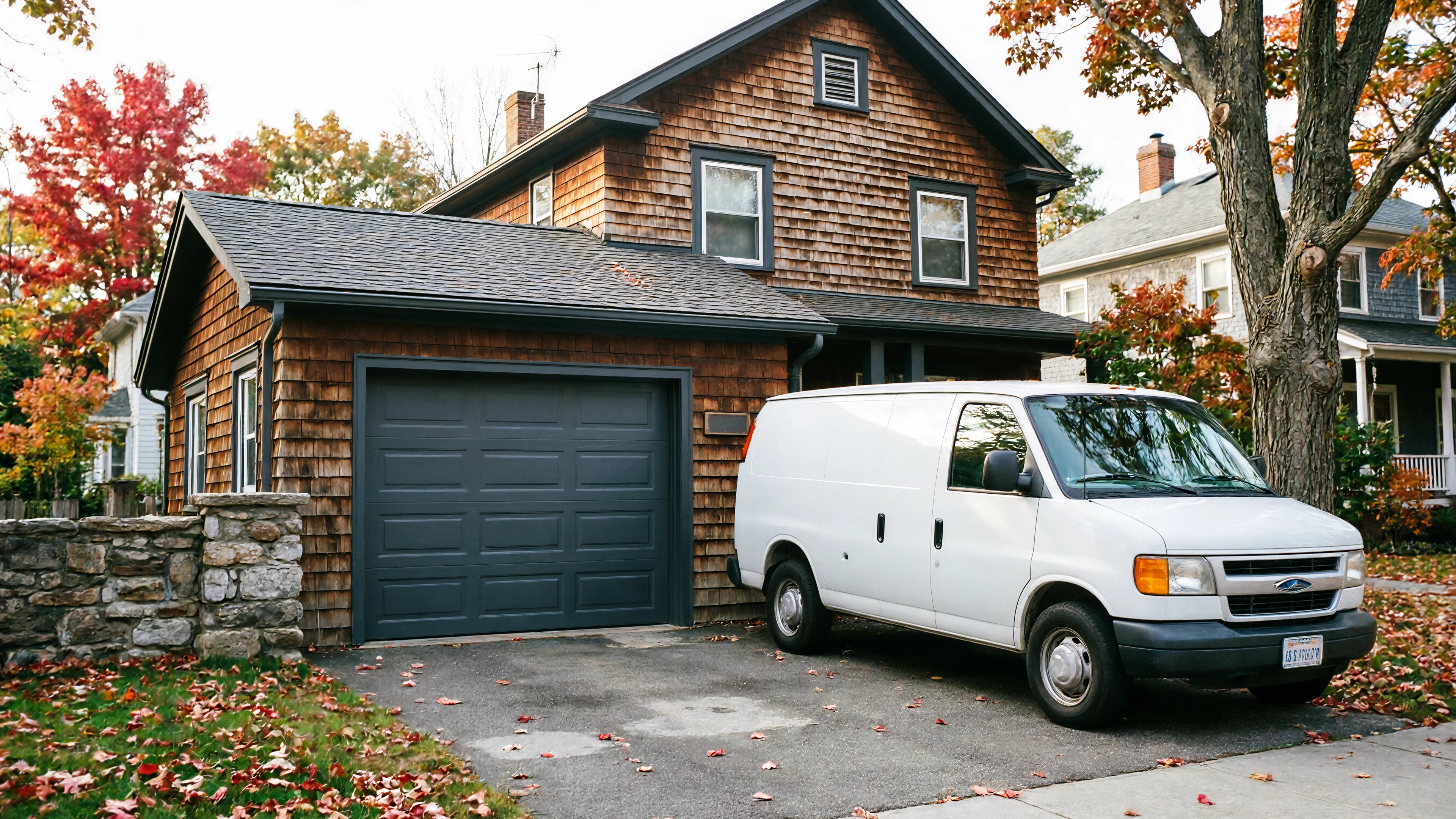
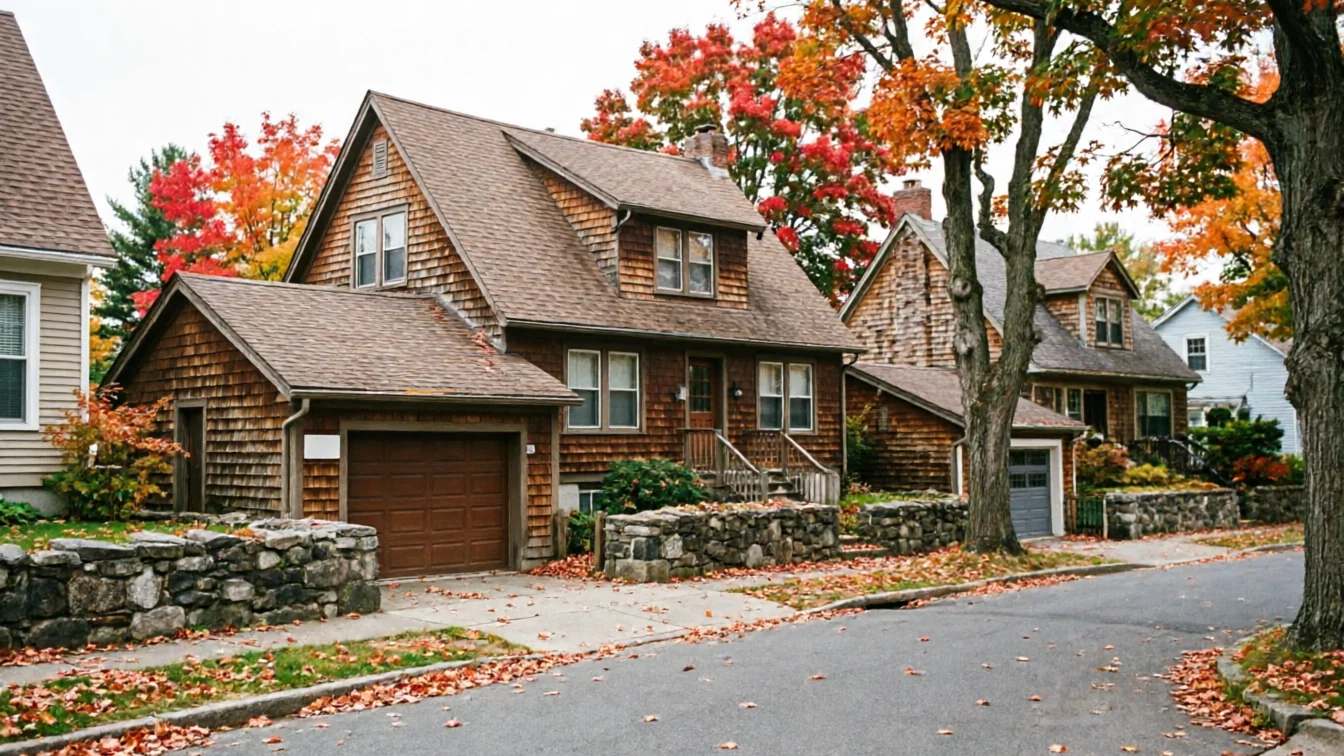
Darien's median home dates to 1957, which puts it a decade ahead of the broader Stamford-area service territory we cover, where the median build year runs closer to 1968. That decade matters. A door and opener installed in the late 1950s has had more years to wear through its original hardware than a 1968 build, and a lot of Darien garages still carry springs, drums, and cable that were never swapped out. The torsion spring on a door that old is well past any reasonable service life, even if it still lifts the door most mornings. Steel fatigues quietly - it doesn't creak a warning first.
The town also sits inside the same severe cold climate band as the rest of our service area, so lubricant left too long in the cold gets stiff, bearings seize slower but seize, and a spring already near the end of its cycle count is more likely to let go on a frigid January morning than a mild one. Add in Darien's household income, well above the service-area median, and you get a lot of houses where the original door was a quality install - which is exactly why it's lasted this long without anyone noticing it's overdue.
Watch-outs
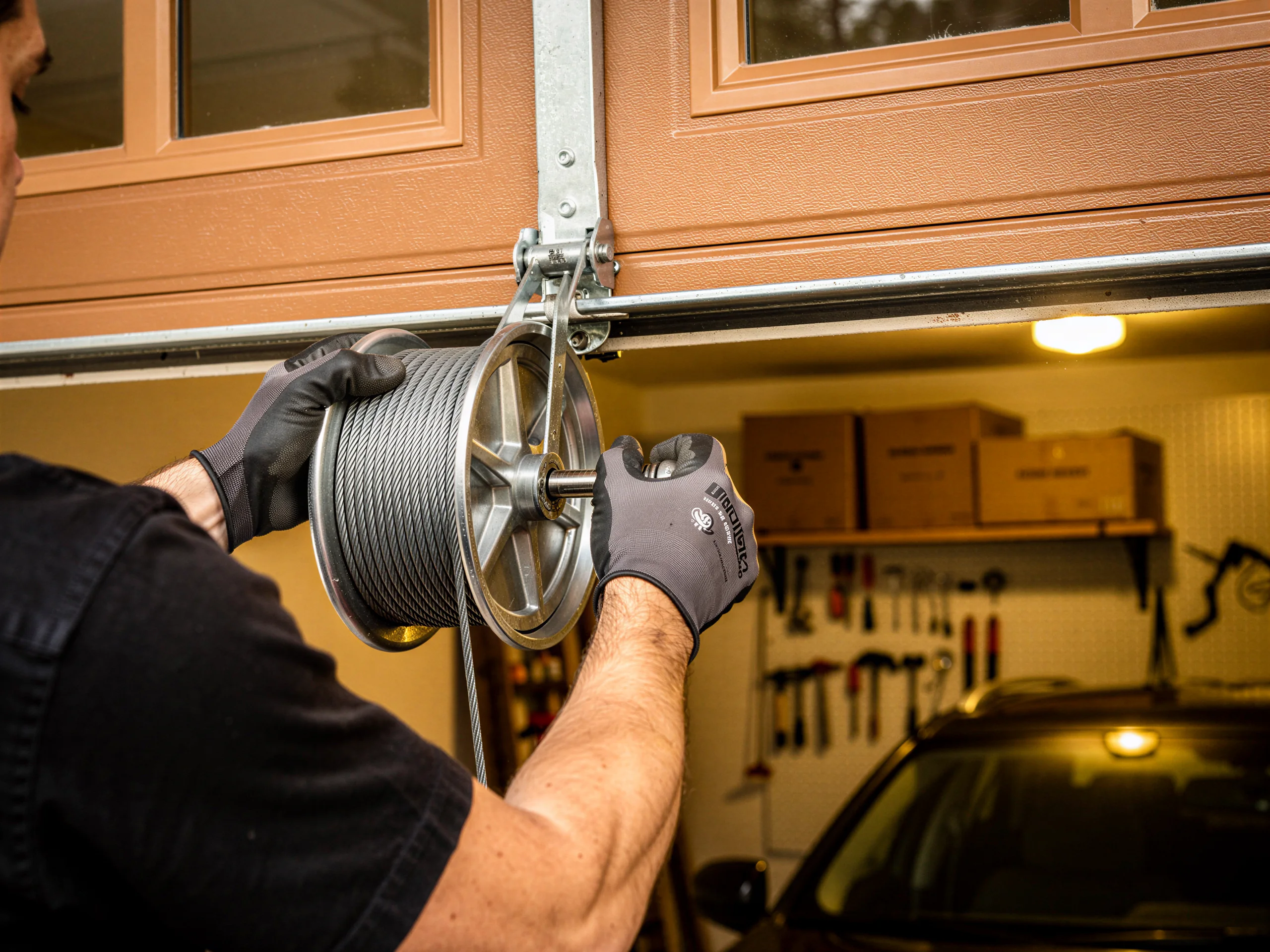
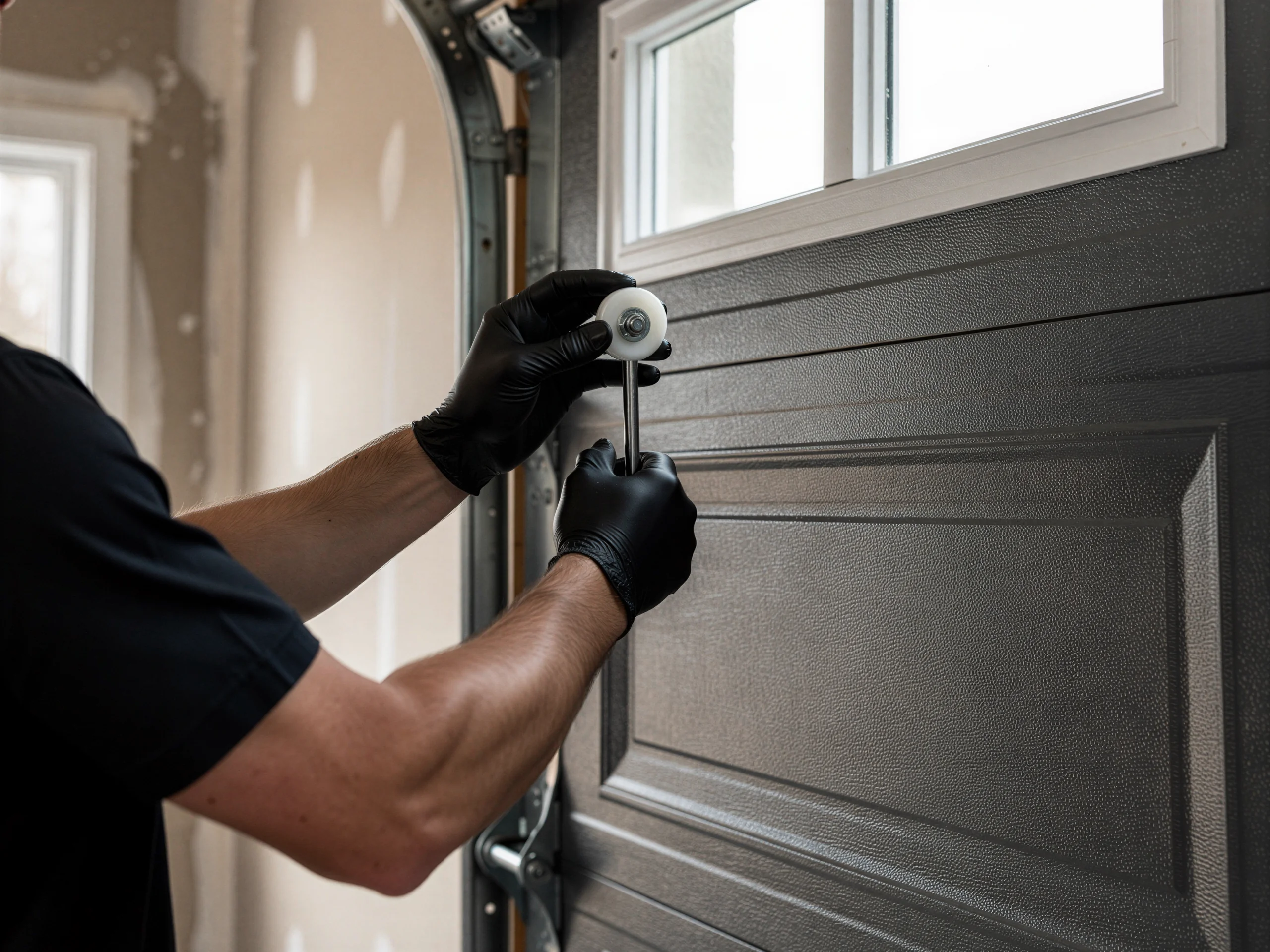
On a door this old, the failure you called about is rarely the only one. We'll pull a cable off a worn drum and find the drum itself is pitted, or replace a dead spring and discover the opposite spring - the one that hasn't broken yet - is just as worn and about to go the same way. Original rollers from a late-1950s install are almost always steel, not nylon, and by now they're loud, flat-sided, and chewing at the track.
The other place it goes sideways is hardware compatibility. A door frame built for 1950s dimensions doesn't always take a modern off-the-shelf spring or bracket without some adjustment, and guessing at the wrong spring size on a door this old is how you get a cable that jumps the drum under load. We size by the door in front of us, not by a part number pulled off a shelf.
The repair
We start by checking both springs even if only one broke - on a door this age, if one side failed from fatigue, the other is on the same clock.
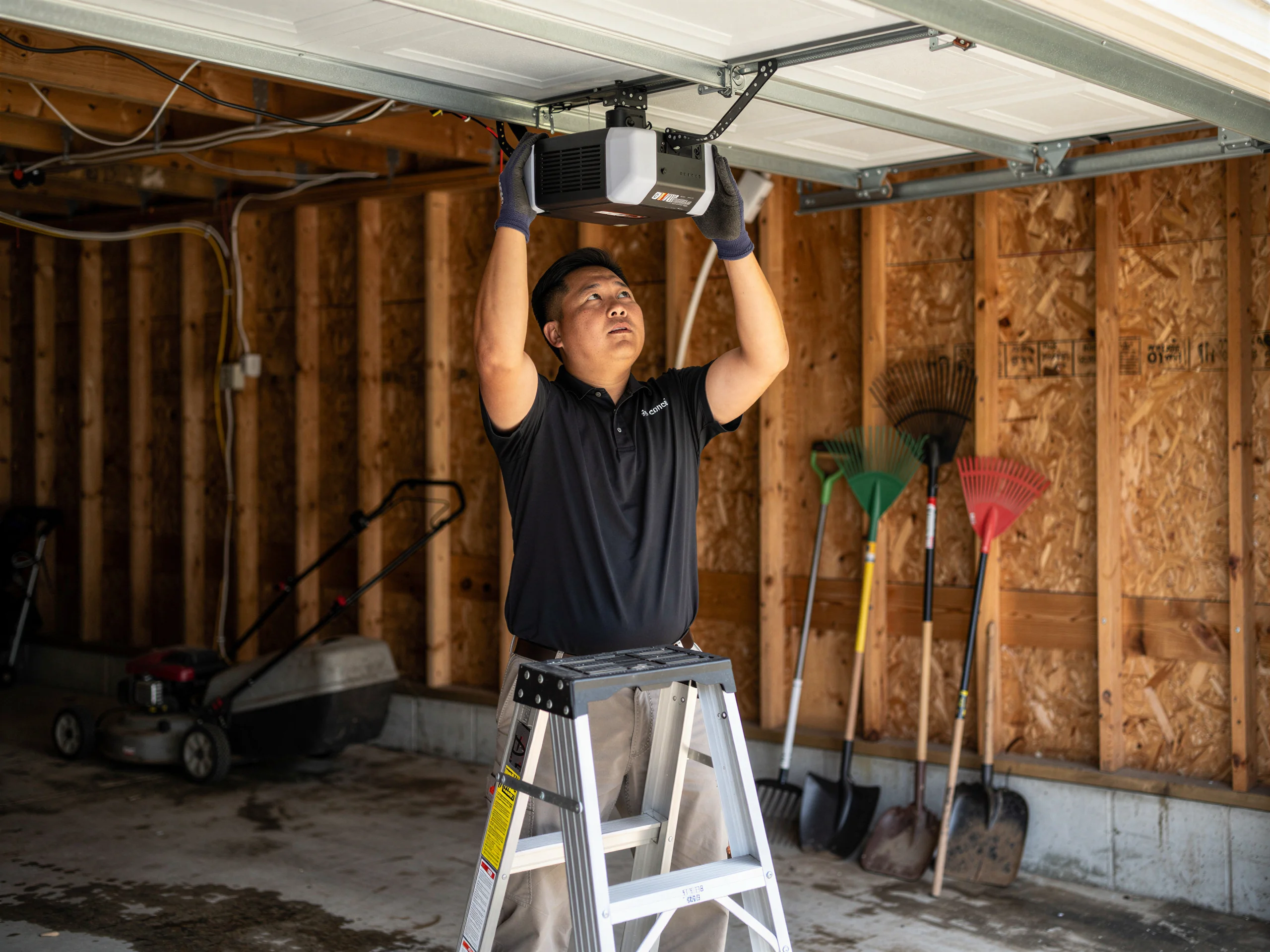
Drums, cable, and rollers get inspected together, since a worn drum will chew through a brand-new cable just as fast as it did the old one. If the opener is original or close to it, we check the drive gear and the travel limits before assuming the motor itself is the problem; a lot of 'dead opener' calls turn out to be a stripped gear that's cheap to fix next to a motor replacement.
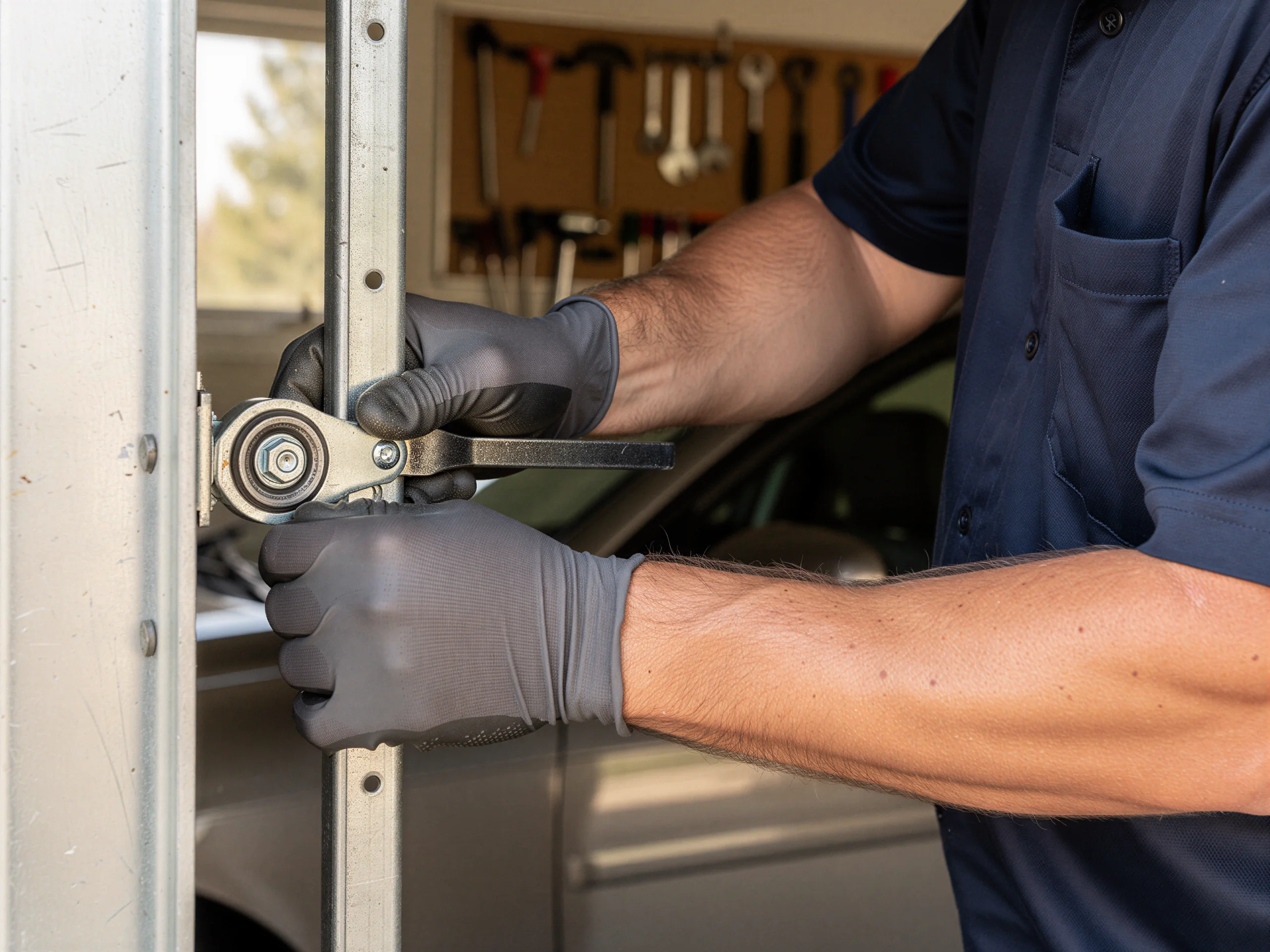
We also check the track alignment and the mounting hardware into the jamb, since houses from this era were framed before modern garage door standards existed, and a track bolted straight into original 1950s framing sometimes needs re-anchoring rather than just a tighten.
We don't replace what doesn't need replacing - if the opener motor is sound, we're not selling you a new one to go with the spring job.
Timing
A straight spring replacement on a double door is a same-visit job once we're there - we're coming from Stamford, about 4 miles out, so travel isn't the bottleneck. Where it stretches is parts. If the inspection turns up a drum, roller set, and opener gear all needing replacement on the same visit, we may not be carrying every part for a door this old on the truck, and a return trip gets scheduled.
That's the honest limitation here: original hardware from a 1950s build isn't always a stock item, and matching a 65-year-old track profile sometimes takes an extra day to source the right bracket rather than forcing a part that's close enough.
DIY or pro
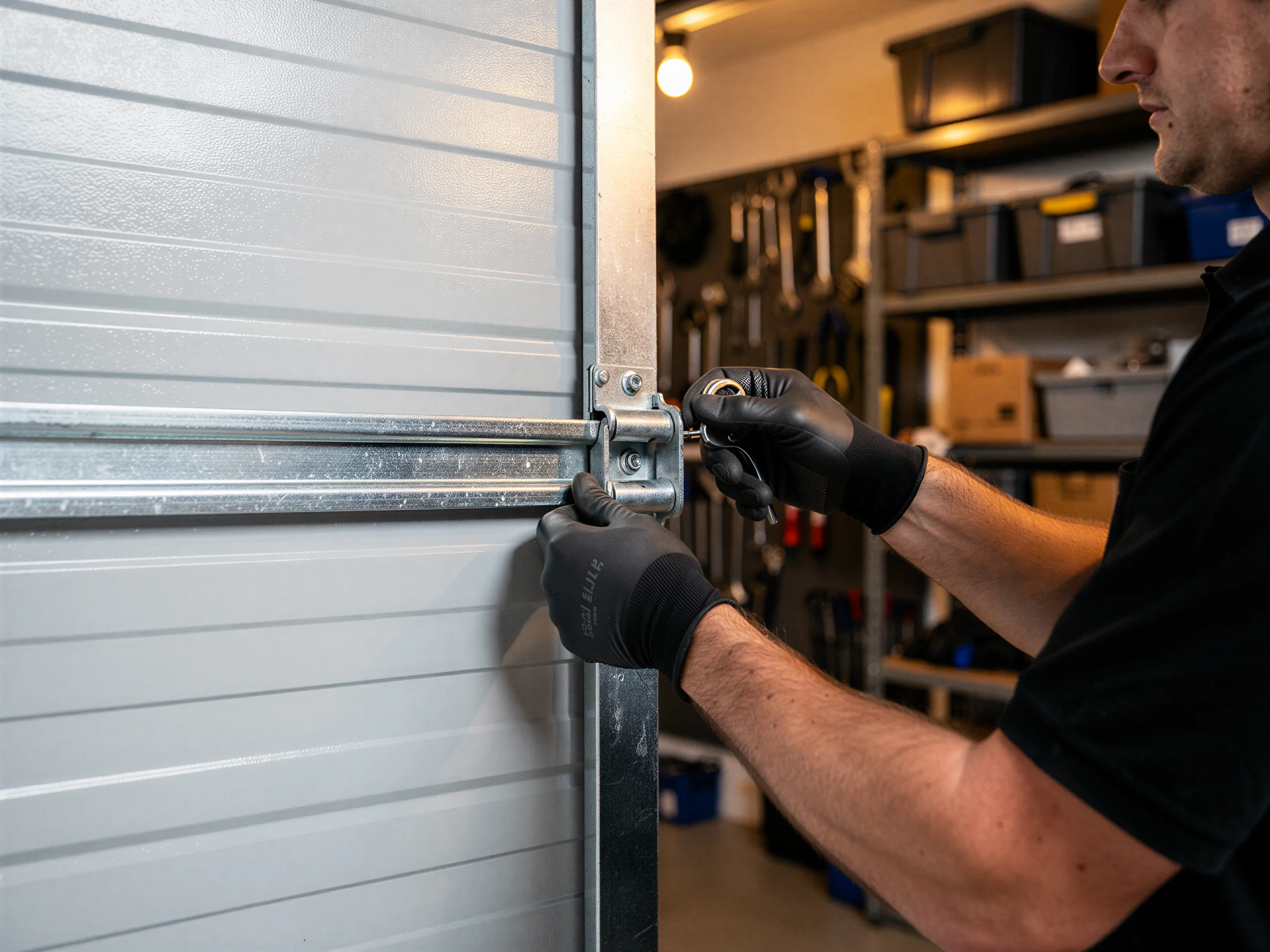
Don't touch the springs. On any torsion system, especially one that's original to a 1950s install and has never been serviced, the stored tension in that coil is enough to break bones or worse if it lets go while you're working on it.
That's not a sales line, it's the actual risk, and it's the one repair on this list we'd tell you to leave alone no matter how handy you are.
What you can reasonably check yourself: the weatherstripping along the bottom, whether the door opener's safety sensors are aligned and clean, and whether the tracks have visible rust or bowing.
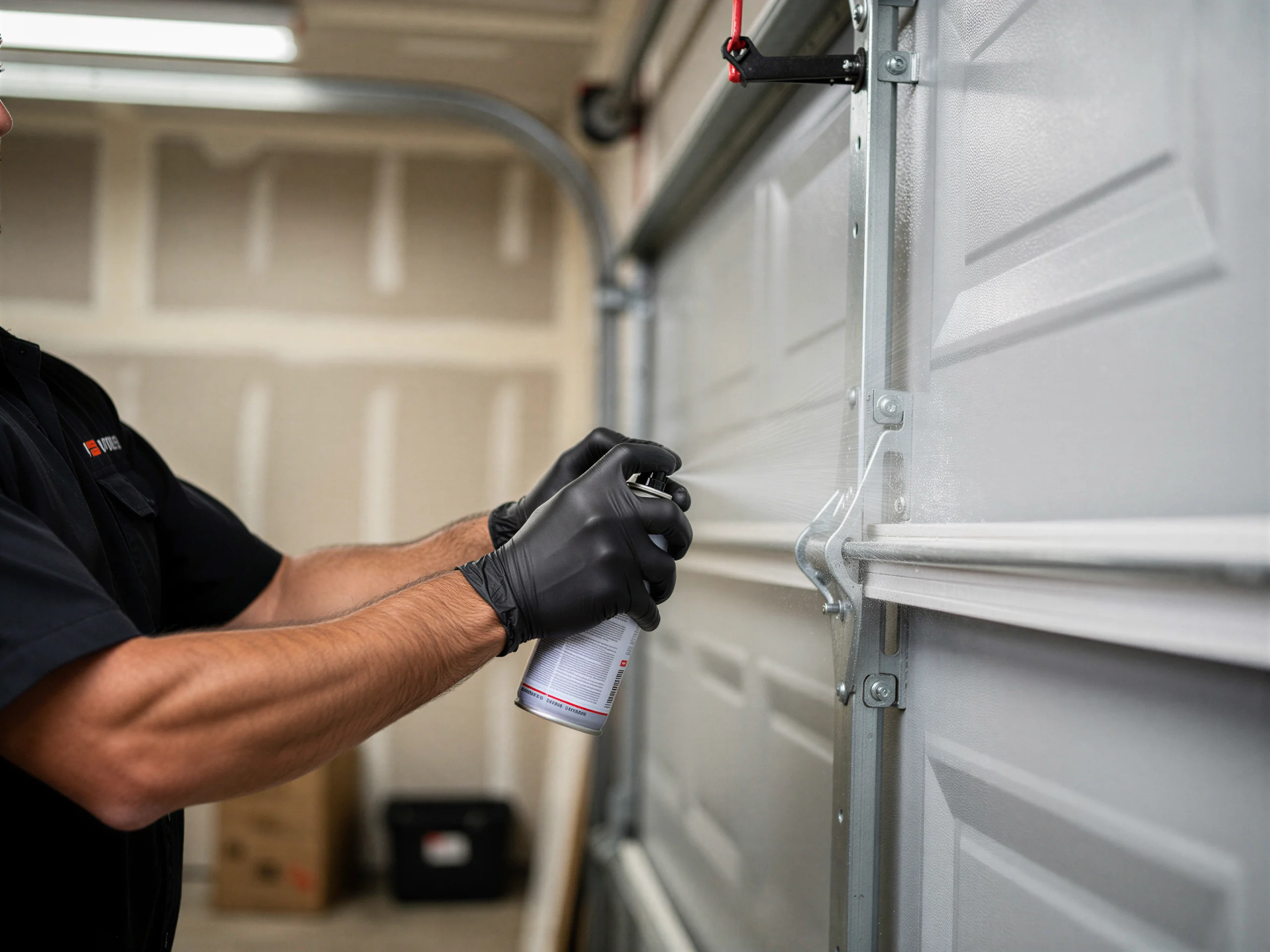
If the door is noisy but still opens and closes level, a light lubrication on the rollers and hinges - not the springs - can buy you time. If it's binding, dropping unevenly, or the springs look stretched or gapped, that's a call, not a weekend project.
Questions
Torsion springs are usually rated for a cycle count, not a calendar age, but a door from Darien's 1957 median build year has almost certainly outlived any reasonable spring life by now, serviced or not. If nobody's replaced it, treat it as due.
We carry common spring sizes and standard hardware, but a drum or bracket matched to a 1950s track profile sometimes isn't a stock item. If your door needs an uncommon part, we'll tell you on the spot rather than force a fit.
Often yes - a well-built door from a solid build era can be worth saving if the panels are sound and it's just hardware that's failed. We'll tell you honestly when the repair cost is getting close to replacement cost.
About 4 miles. We work Darien as part of our regular service area out of Stamford.
Explore more
Ready when you are
Stamford Garage Door Pros repairs and installs garage doors, springs and openers in Stamford, CT and the surrounding area.