
Pinch point damage
Force the door through that pinch point a few more times and you crack the roller stem or tear the bracket loose from the framing, which turns a track adjustment into a carpentry fix.
Darien, Stamford
Darien's 1957-era houses put a lot of doors on old extension-spring track hardware. Here's why doors jump track here and what the fix actually involves.
Popular Services
Local causes
Darien has about 7,111 households, a smaller and more uniform base than the roughly 60,329 across the whole area this company covers. That matters for off-track calls because it usually means one particular house type showing up again and again, not a grab bag of different eras and setups. The median home here went up in 1957, nine years ahead of the 1968 median across the service area as a whole, so a lot of these garages still carry their original extension-spring setups with track brackets that were never built for today's heavier insulated doors. When someone bolts on a heavier panel without upgrading the brackets, the door starts walking sideways in the track a little more each cycle until one day a roller pops clean out of the rail. That's the pattern this town produces more than most: not a dramatic cable snap, but a slow drift that ends in a door hanging crooked on one side.
Watch-outs
The common trap on a 1957-era track setup is a bent rail that looks fine from the driveway but is actually pinched a quarter inch out of plumb where it meets the wall bracket.
Force the door through that pinch point a few more times and you crack the roller stem or tear the bracket loose from the framing, which turns a track adjustment into a carpentry fix.
Cold-band winters add another wrinkle: ice forming overnight in an unheated garage can seize a roller against the rail, and the next person to hit the opener button yanks that roller out of its track trying to force a door that's frozen in place.
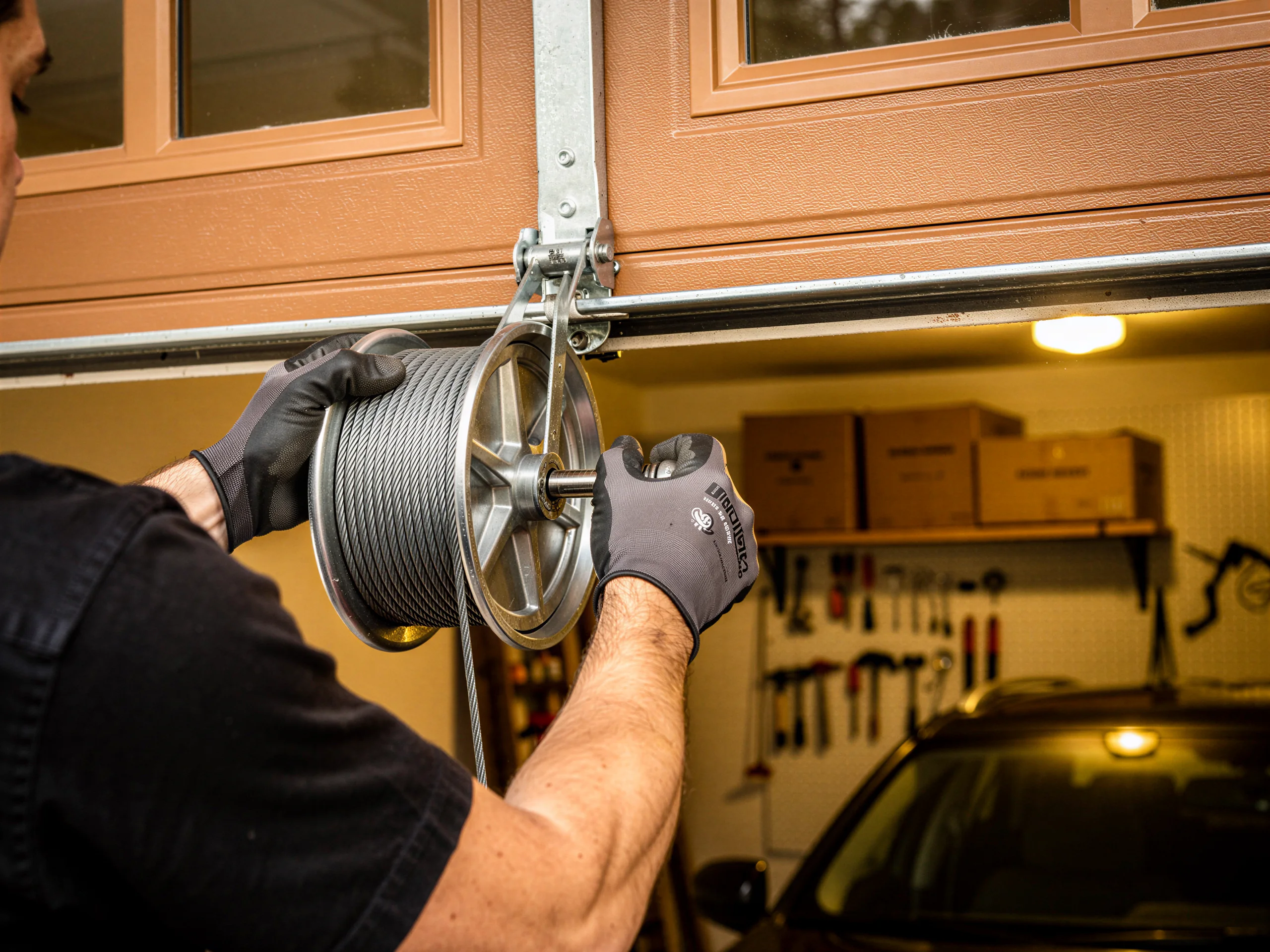
On older hardware, the extension spring cable can also jump its pulley when a track bends, and that cable under tension is not something to put a hand near. The honest limit here is that if the track is more than lightly bent, straightening it rarely holds - the metal work-hardens at the kink and bends again at the same spot within weeks.
The repair
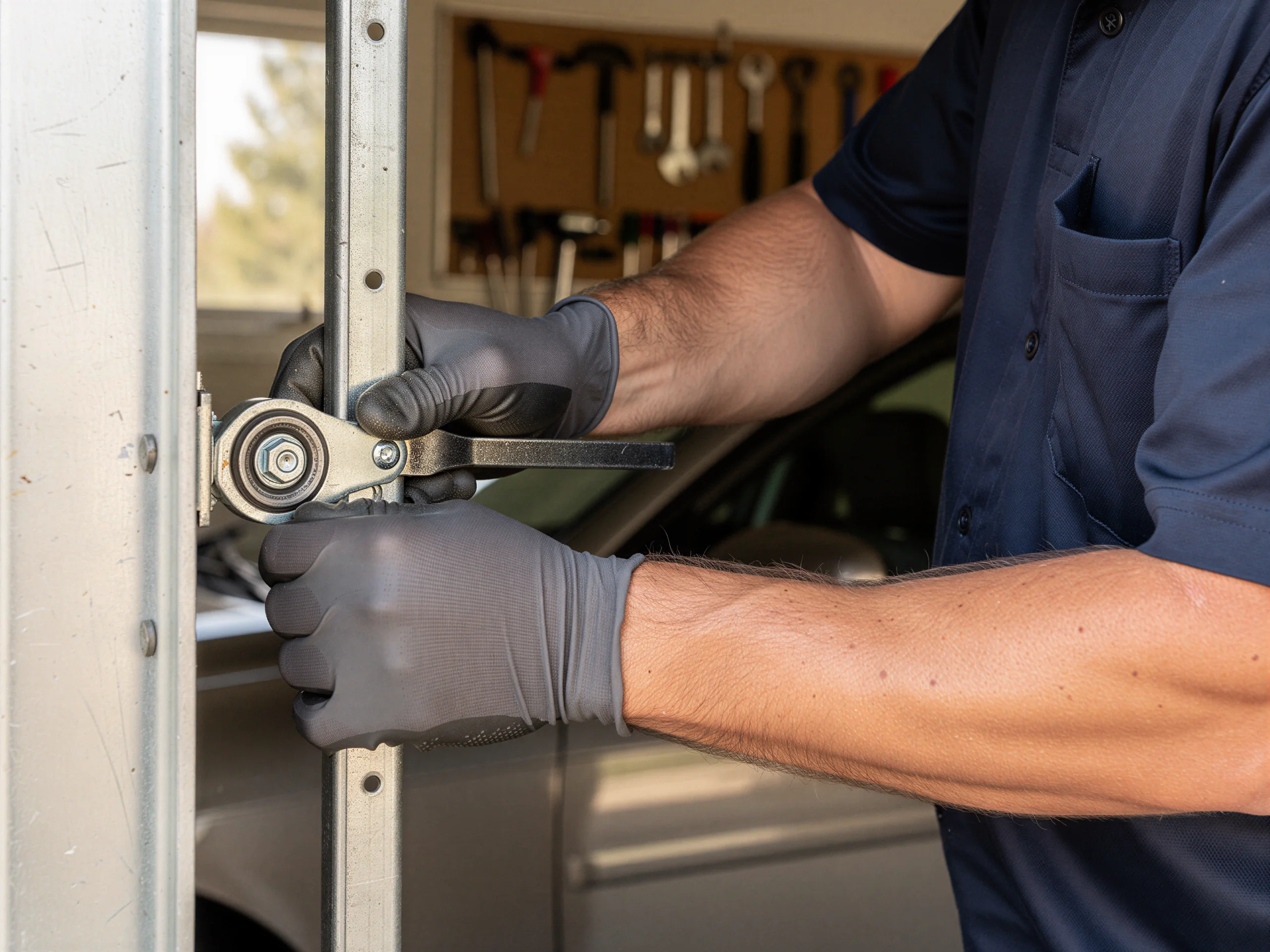
First step is figuring out whether the door came off because of a bent track, a broken roller, a loose bracket, or a cable that jumped its pulley - those are four different repairs wearing the same symptom.
On the 1957-vintage extension-spring setups common here, the fix often means replacing the bent section of track rather than trying to re-true it, since bent steel on an older rail rarely holds alignment for long.
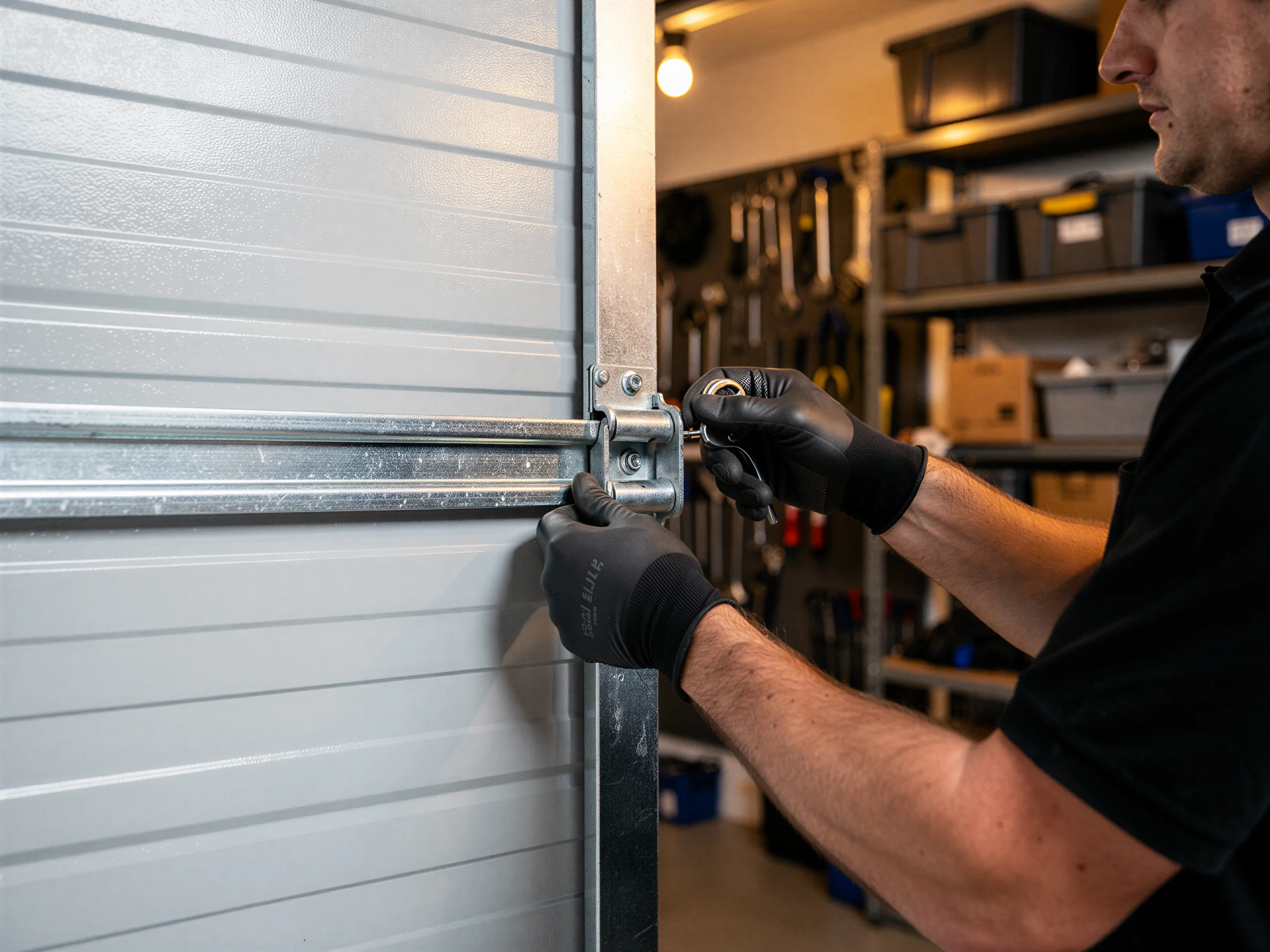
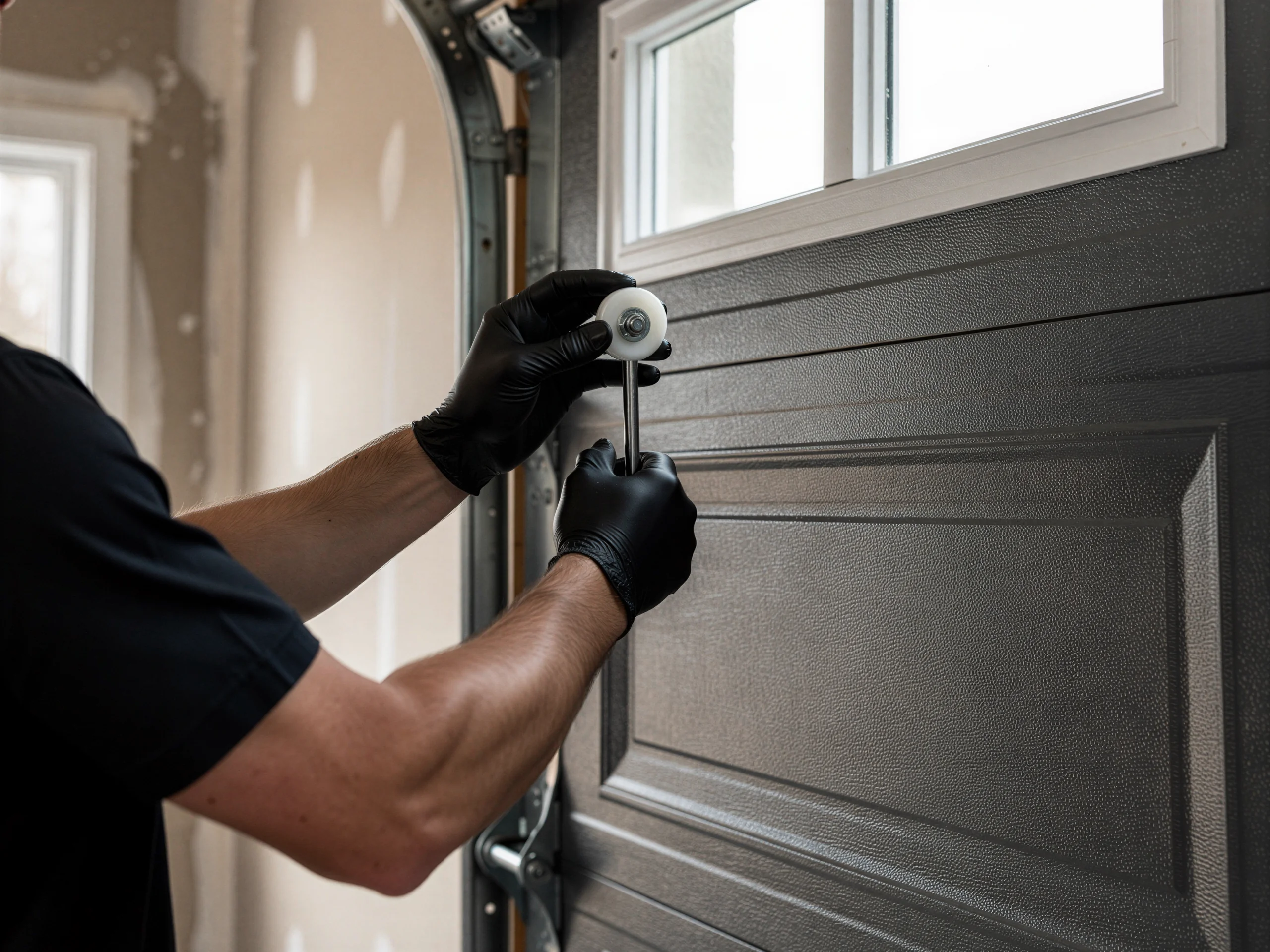
Brackets get re-anchored into solid framing, rollers get swapped for nylon ones that run quieter and don't bind the way the original steel rollers do, and the door gets re-leveled so it doesn't drift back into the same groove it just wore.
Where the opener forced the door against a jammed track, the drive gear or trolley sometimes needs a look too, since that's a common secondary casualty. Given Darien's median household income runs well above the service area's overall figure, most jobs here end with a hardware upgrade - new track, new brackets - rather than a patch, since the cost difference over a five-year span is small.
Timing
Most off-track jobs are a same-visit repair once the truck is on site - track straightened or swapped, rollers replaced, door re-leveled and run through a few cycles to confirm it tracks straight.
A bracket that pulled out of rotted or undersized framing takes longer, since that framing has to be shored up before anything gets re-anchored, and that's not always visible until the panel is off the track.
The drive up from Stamford is about four miles, so getting a tech to the job isn't the bottleneck - the bottleneck, when there is one, is whichever part turns out to be worn past the point of adjustment rather than repair.
A single bent section of track is usually quick. A door that's been run off-track repeatedly, with multiple rollers chewed up and a bracket pulled loose, takes a full morning, not an hour.
DIY or pro
If a door is visibly off its track, the one thing worth doing yourself is stopping: don't run the opener again, don't try to force the panel back by hand, and don't cut the cable or the spring.
An extension spring under tension on a jammed door can whip with enough force to break a bone, and that risk doesn't go away because the fix looks simple.
What's reasonable to check yourself is whether anything obvious caused it - a dropped item in the track, a loose hinge bolt, visible rust at a roller. Beyond that, realigning a track and re-tensioning spring hardware calls for tools and clearance most garages don't have lying around.
On the older 1957-era setups common in this town, a well-meaning DIY straighten job on a bent track usually just moves the bend somewhere else on the same rail.
Questions
A lot of it traces back to the housing stock here - Darien's median home dates to 1957, well before current door and track hardware standards. Original brackets and extension-spring setups weren't built for today's heavier insulated panels, so the door drifts out of alignment gradually until a roller pops loose, often during a cold snap when ice stiffens the rollers further.
No. If the door is off-track, the spring may still be under tension, and forcing the panel can snap a cable or whip a spring hard enough to cause serious injury. Leave the door where it sits and get it looked at before running the opener again.
A light bend sometimes straightens and holds, but on older rail sections common in Darien's 1957-era garages, a bent track usually re-bends at the same kink within weeks. On those, swapping the section is more reliable than trying to re-true it.
The crew drives from Stamford, about four miles from Darien, so there's no separate branch or depot here - just a short drive before work starts.
Explore more
Ready when you are
Stamford Garage Door Pros repairs and installs garage doors, springs and openers in Stamford, CT and the surrounding area.