
Out-of-square jamb settling
The second surprise is the jamb itself - decades of settling on a house this old means the opening is rarely square, and a door that looks fine on paper binds on one side once it's hung.
Darien, Stamford
Darien homes mostly date to the late 1950s, with original one-piece doors and torsion springs. Stamford Garage Door Pros installs replacements from Stamford.
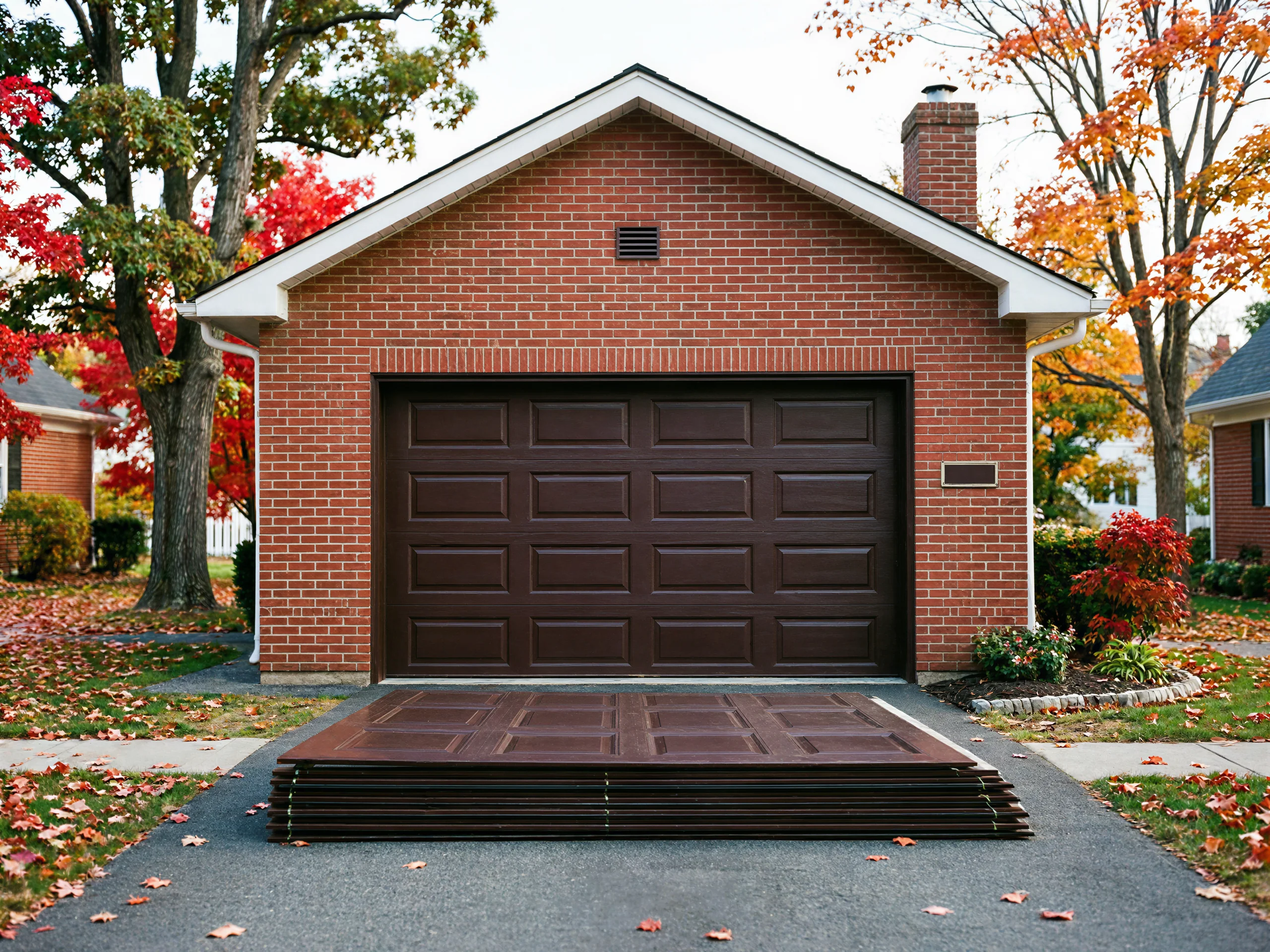
Popular Services
Local causes
Darien's housing stock centers on 1957, a decade older than the 1968 median across the rest of the Stamford service area, which puts original one-piece doors and side-mounted torsion hardware behind a lot of these garage walls. That generation of door was built for a different opener, if it has a powered opener at all, and the track geometry doesn't match anything sold new today. When a homeowner calls about a door that's gone heavy or won't seat flush, it's usually not one bad part - it's a whole system that predates sectional doors, insulation standards, and modern spring counterbalance by twenty years.
This matters for installation, not just repair. You can't bolt a new sectional door onto 1950s jamb framing and expect clean clearances. The header height, the side room, and the floor-to-ceiling run were all set for a different product. A proper new-door job here starts with measuring what's actually there, not what the catalog assumes is there. Skip that step and you get a door that binds on the first cold morning, which brings its own trouble given the climate this area sits in.
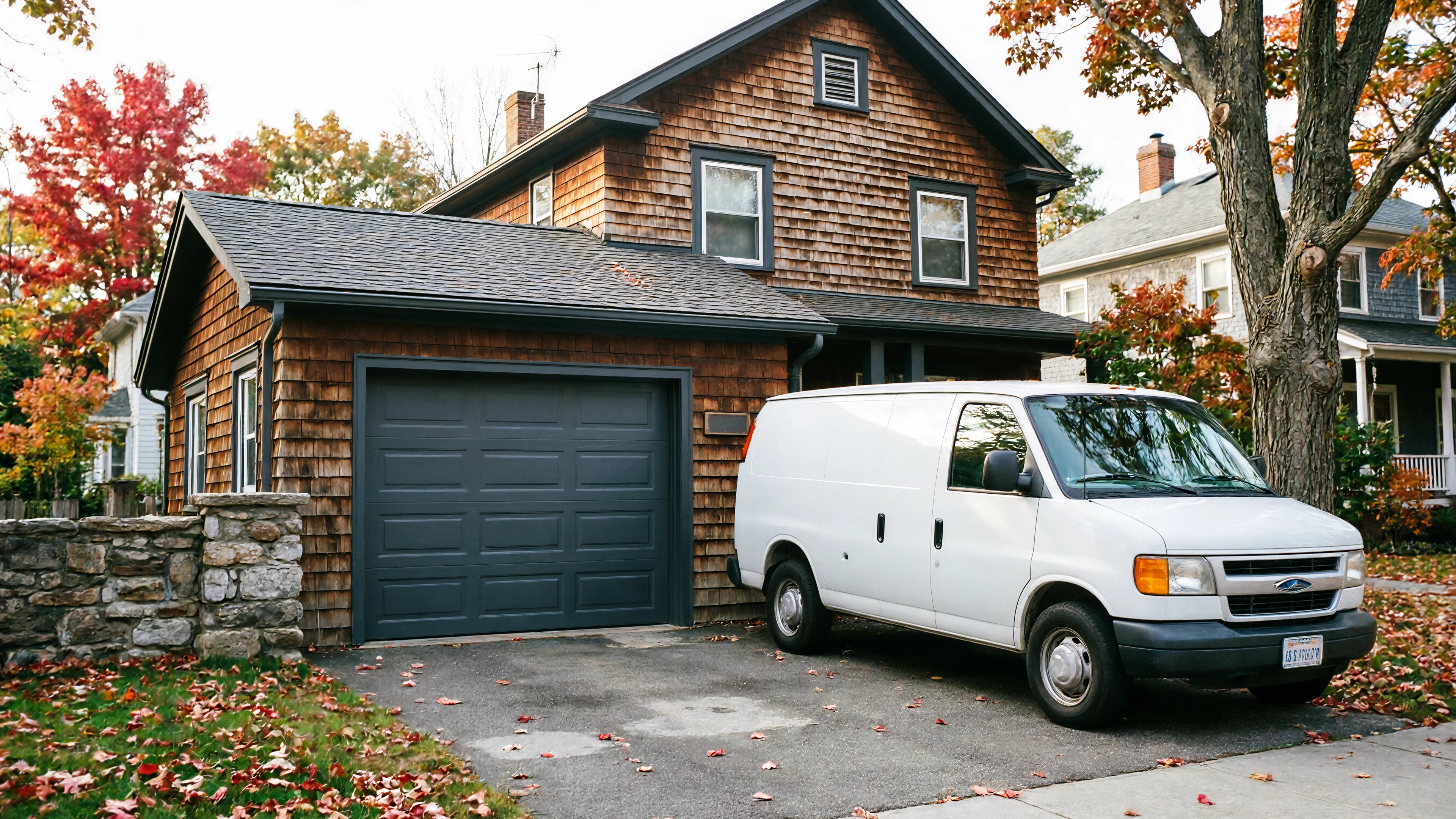
Watch-outs
The most common surprise on a 1950s-era Darien garage is headroom. Original construction left less clearance above the opening than current torsion spring systems want, so a straight swap of old-for-new can mean the spring won't clear the header, or the opener bracket has nowhere to mount without reframing.
The second surprise is the jamb itself - decades of settling on a house this old means the opening is rarely square, and a door that looks fine on paper binds on one side once it's hung.
Cold is the other factor. This area carries a severe cold-climate rating, and an old steel door with no insulation layer was never built to handle the swing in temperature a sealed, insulated sectional door is expected to handle now.
Swapping the door without addressing the seal and track clearance together just moves the draft from the door panel to the weatherstrip. None of this is unusual for houses from this era - it's just more than a straight product swap, and pricing it as one leads to change orders mid-job.
The repair
A new installation on a house built around 1957 starts with the opening itself - header height, jamb square, and floor slope - before any door gets ordered.
Where the original clearance is tight, that means selecting a low-headroom torsion spring kit rather than the standard-mount hardware that works fine on newer construction. The track gets set to match what's actually there, not re-cut from a generic template.
Once the frame is confirmed, the door itself gets matched to the opening and to the weatherstrip detail that actually holds against a severe-cold winter - a continuous bottom seal and insulated panel core, not a cosmetic double-wall skin.
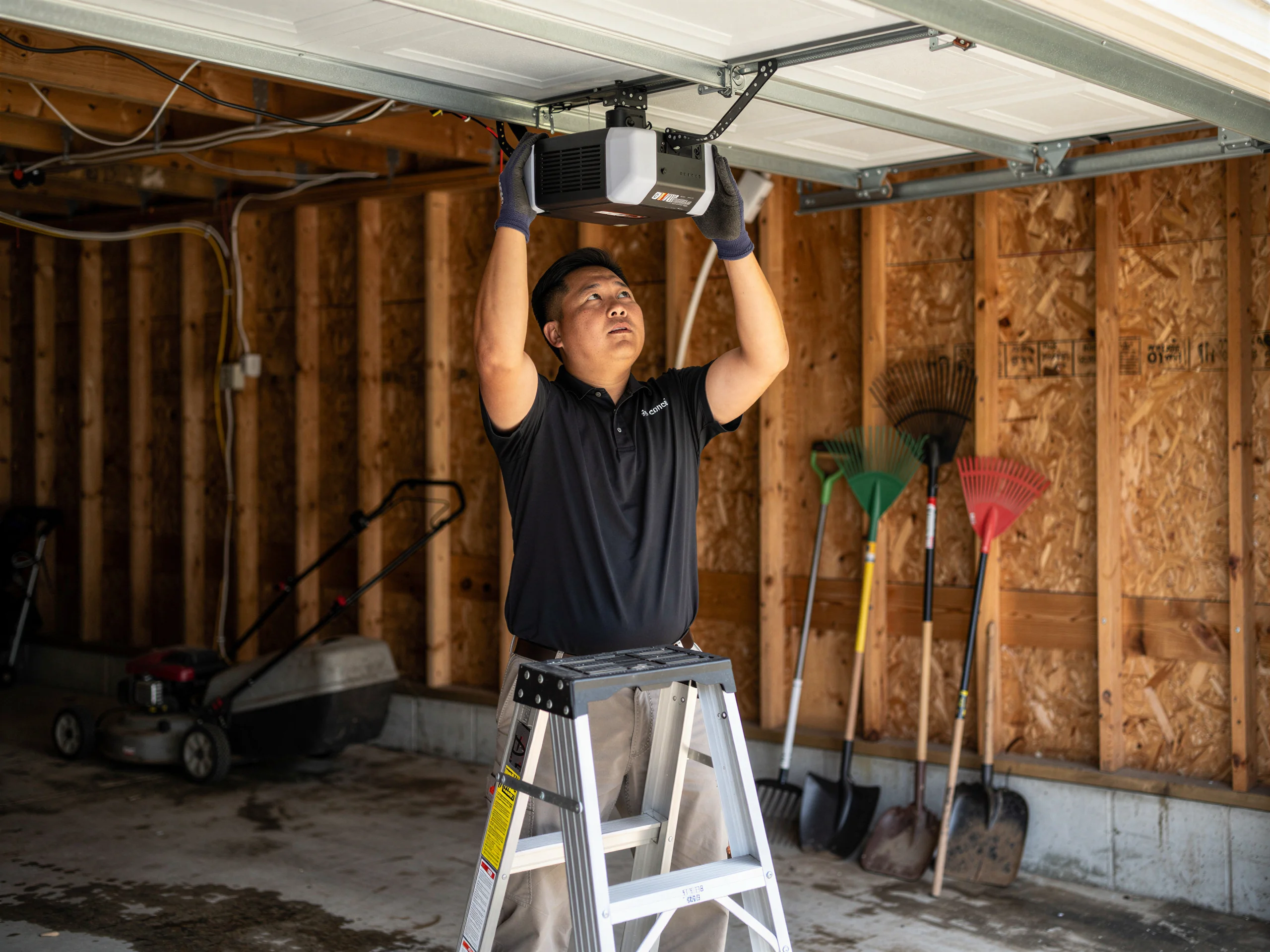
The opener, if replaced at the same time, gets mounted to hardware rated for the spring system chosen, not whatever bracket shipped with the box. This is slower than a stock swap, and it should be - fitting new hardware to an old frame is most of the actual work on a job like this.
Timing
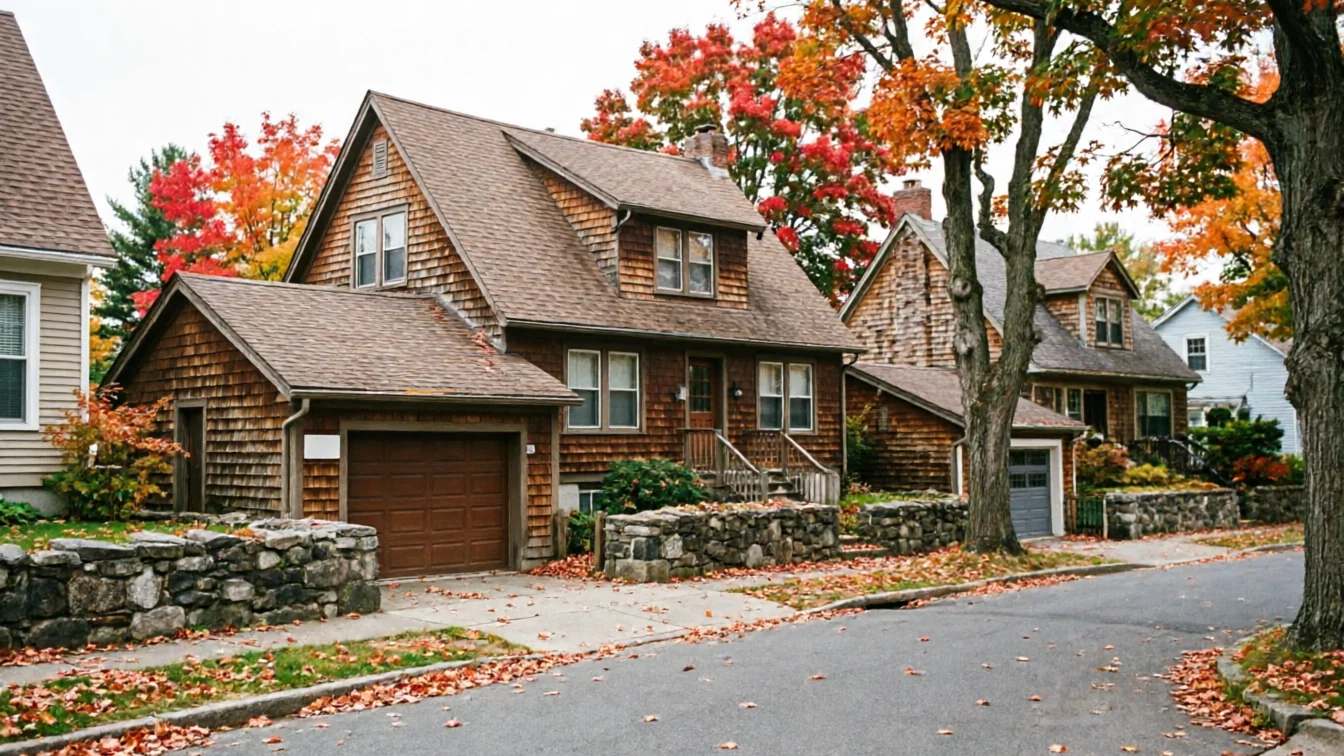
We run this job from Stamford, about 4 miles out, so travel isn't the long pole - fitting is. A straight swap where the opening checks out square can be a single visit. A job where the header needs shimming or the track needs re-hung for a low-headroom spring kit runs longer, because that work has to happen before the door goes in, not after.
Here's the honest limit: we don't carry every low-headroom spring configuration or every custom width on the truck. Older Darien openings are inconsistent enough - some narrower, some with less headroom than you'd guess - that an accurate schedule means measuring first and ordering to match, rather than promising a same-day install sight unseen. That's not a sales line, it's just what a house built in 1957 requires if you want the door to still operate right in five years.
DIY or pro
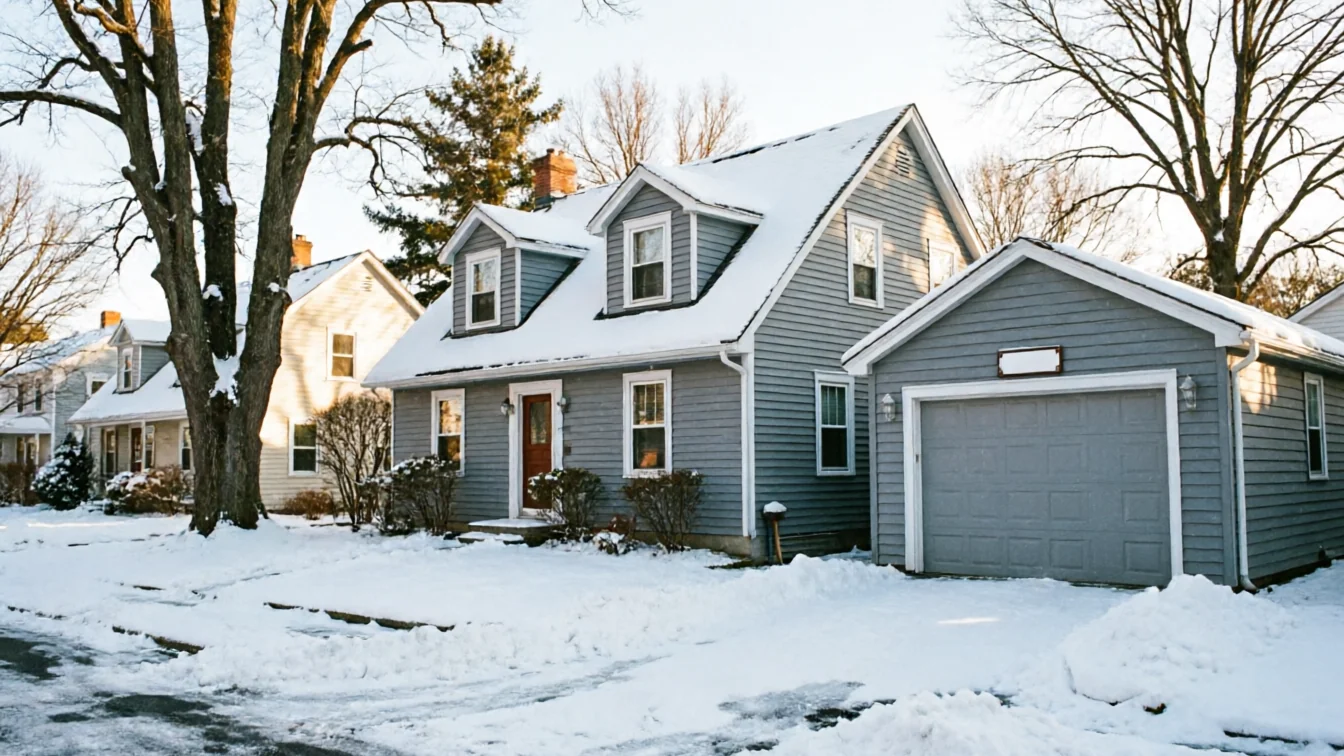
Torsion spring work is not a reasonable DIY project on any door, and it's worse on an opening from this era because the spring size and headroom clearance aren't standard. Get the wind count or the shaft diameter wrong on a low-headroom kit and the door either won't balance or the spring fails under load - and a failed torsion spring under tension is a genuine injury risk, not an inconvenience.
What a homeowner can reasonably handle is the decision-making part: knowing whether a 1950s-era door is worth patching or whether full replacement makes more sense. With median household income here at $250,001 - well above the $183,112 median across the wider Stamford service area - most Darien jobs we see skip the patch-and-wait repair cycle and go straight to full replacement once the original hardware starts showing its age. That's a reasonable call on a house this old; the parts for the original system aren't getting easier to find.
Questions
On a house from this era, that's usually a torsion spring losing tension, not a door problem. Original spring hardware from the 1950s-60s wasn't built for an indefinite service life, and once it starts to sag, the opener takes on load it wasn't sized for. That accelerates wear on the opener motor too.
Sometimes, but not as a default. Headroom and jamb square on houses built around 1957 often don't match what current torsion hardware expects. We measure the opening first; if it needs a low-headroom spring kit or minor reframing, that's part of the job, not an add-on surprise.
Not usually for a full installation. A straight swap on a square opening can move fast, but openings from this era are inconsistent enough that we order hardware to match what we find rather than guess. We travel from Stamford, about 4 miles out, so scheduling the return visit isn't the bottleneck.
Past a certain point, yes. Once the original spring, track, and panel are all original to a 1950s install, repairing one part just exposes the next failure. Given what full replacement costs versus a string of repairs on hardware that's no longer made to spec, most owners here choose to replace once it starts failing.
Explore more
Ready when you are
Stamford Garage Door Pros repairs and installs garage doors, springs and openers in Stamford, CT and the surrounding area.