Original hardware age
What changes the clock isn't the drive, it's the door. Most houses in this part of town went up around 1967, and a lot of them still carry the original hardware or a straight swap from decades back.
Old Greenwich, Stamford
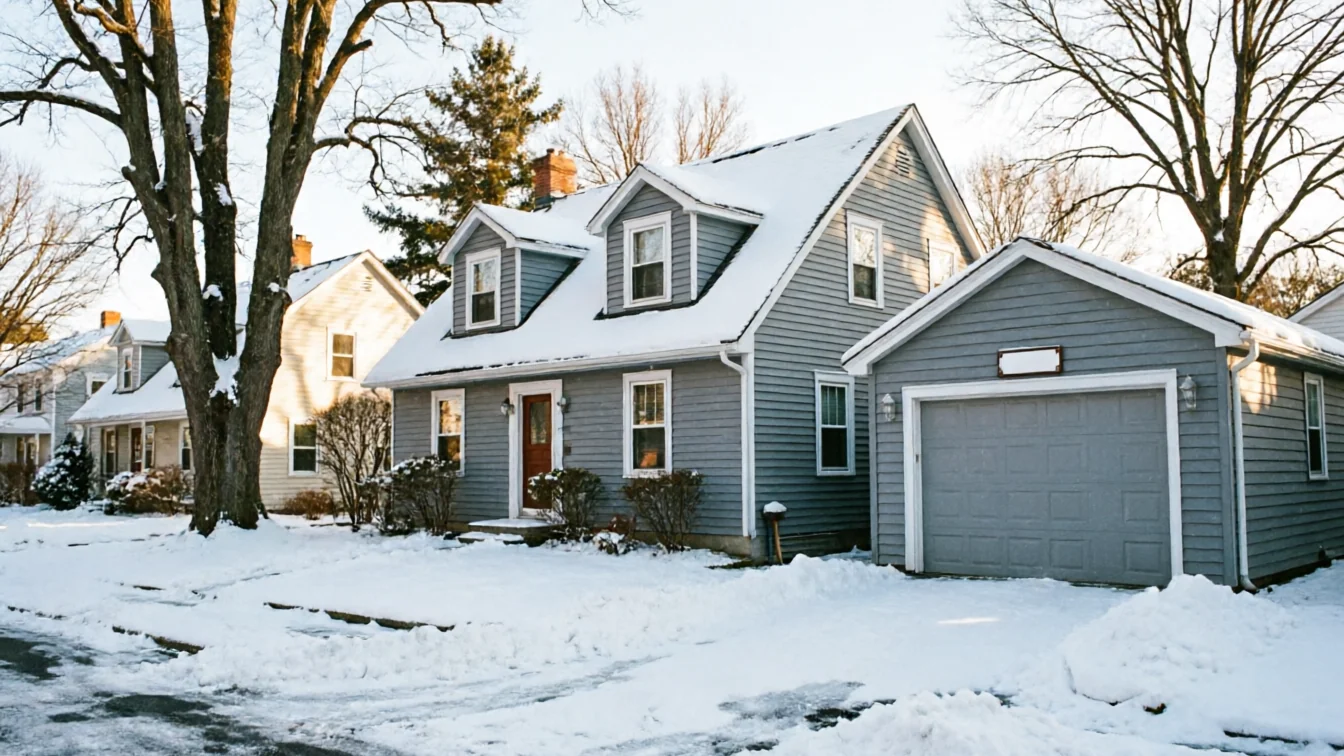
Garage door repair for Old Greenwich, CT homes built mostly in the 1960s, serviced from Stamford, 4 miles away. Hardware fit to original 1967-era doors and springs.
Popular Services
Timing
We run this job out of Stamford, about 4 miles west, so there's no branch office sitting in Old Greenwich itself - the truck comes to you.
What changes the clock isn't the drive, it's the door. Most houses in this part of town went up around 1967, and a lot of them still carry the original hardware or a straight swap from decades back.
That means before anyone touches a spring or a track, we're often tracing down what size and style of part actually fits a door that old, since the horizontal-track extension setups common on 1960s construction aren't what gets stocked for new installs.
A stuck torsion spring on a modern door is a known quantity. A seized extension spring on a 55-year-old track bracket takes a longer look first. We'd rather tell you that up front than guess at a time and miss it.
The repair
Doors on houses built around 1967 in this area typically came as plain steel panels on extension springs running along the horizontal track, not the centered torsion bar that's standard today.
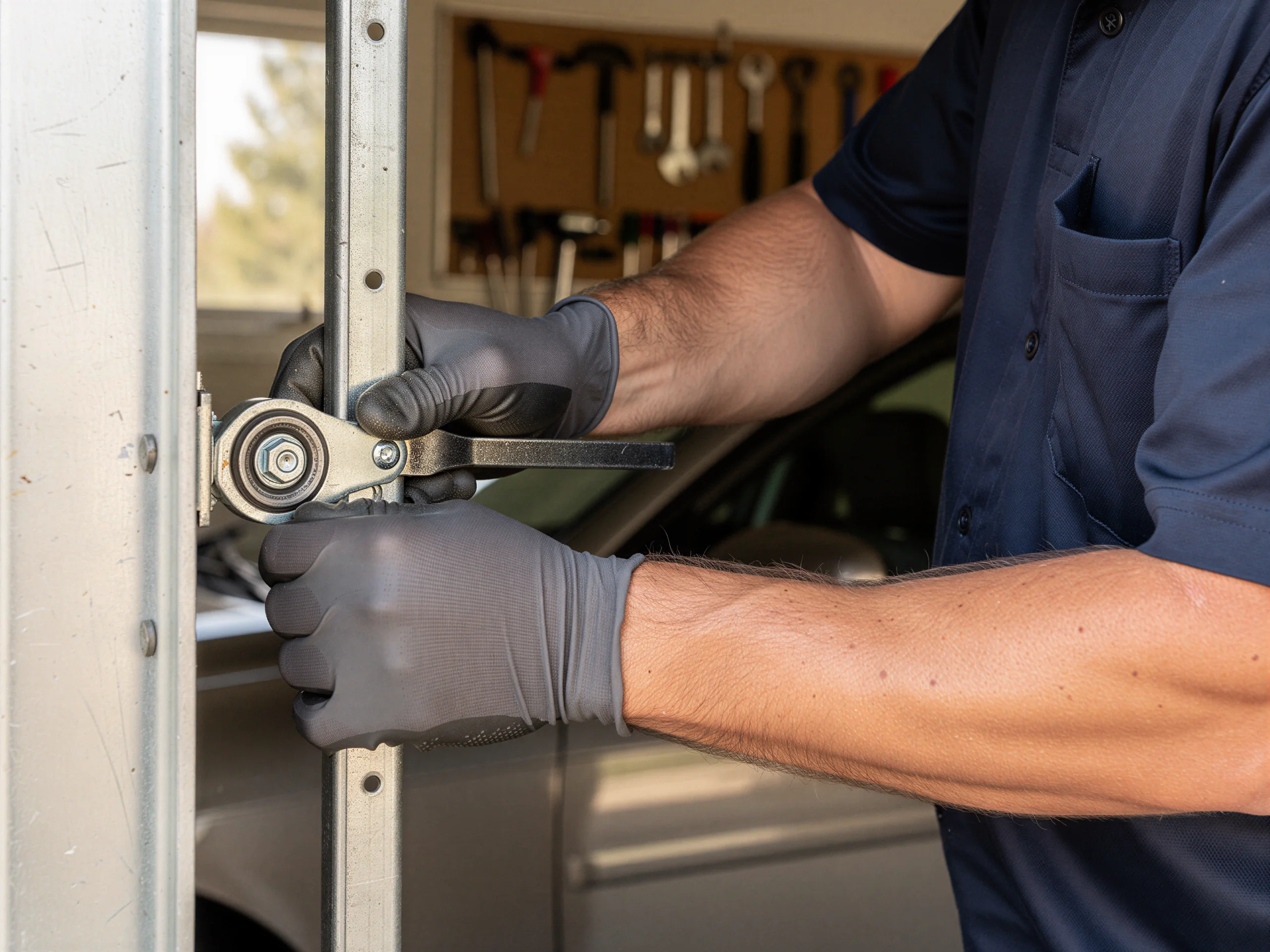
The fix depends on which hardware is still in place. If the original extension springs and their safety cables are still doing the lifting, the repair is usually a spring and cable swap plus a check of the pulley and fork anchor - parts that wear out from age and cycling, not from any one bad day.
If a prior owner already converted the door to torsion at some point, we're working with newer hardware and the repair looks more like what you'd find on any other door from the last 20 years.
Either way, the first ten minutes of the job is figuring out which era of hardware is actually hanging over your head, because ordering the wrong spring length or drum size on a house this old wastes a trip for everyone.
DIY or pro
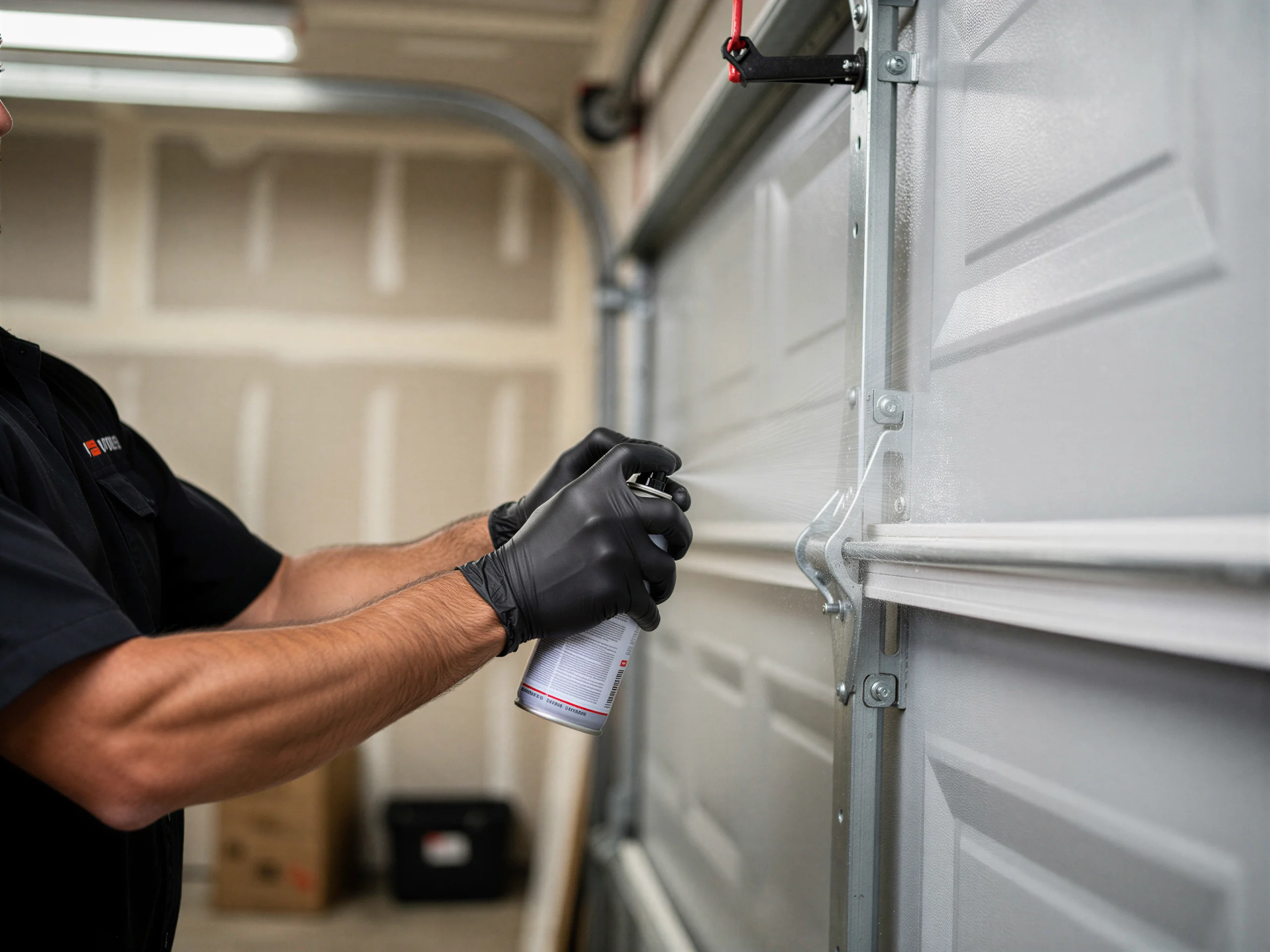
Lubricating hinges, rollers, and the track rail is fair game for an owner with a ladder and a can of the right lubricant - it's cheap insurance and it's not going to hurt anything. Tightening loose bolts on the track brackets is reasonable too, as long as the door is down and the opener is unplugged. What we don't recommend touching yourself is the spring system, torsion or extension. Extension springs in particular, the kind common on doors from this era, store enough force to put someone in the hospital if the safety cable has worn thin or isn't there at all - and on a door this age, we see missing or frayed cables often enough that we check them as a matter of course. If a spring is broken, sagging, or stretched out of shape, that's a call, not a weekend project.
Pricing
We don't post a flat price here because the hardware variable matters more in Old Greenwich than in a neighborhood built in the last 20 years - a straightforward torsion spring swap costs less than tracking down parts for an original 1960s extension system that nobody stocks off the shelf anymore. Median household income in this area runs around $250,001, well above the $183,112 median across the rest of the territory we cover from Stamford, and that shows up less in the labor rate and more in the doors themselves: insulated steel, heavier gauge panels, sometimes custom widths that cost more to match than a standard builder-grade door. We'll give you a number after we've seen the door and know which era of hardware we're dealing with, not before.
Warning signs
On a house from the late 1960s, the complaint we hear most is a door that's gotten heavy to lift by hand or groans partway up - that's usually a spring that's lost tension after decades of cycling, whether it's the original extension spring or a torsion unit installed later.
Binding on one side as the door travels is common too, especially where the horizontal track has sagged slightly on its original brackets over 50-plus years of winters.
This area sits in a climate zone with real cold exposure, and the freeze-thaw cycle works on old hardware the same way it works on old driveways: brackets loosen, lubricant gums up, and a door that worked fine in September starts catching in January. If your door is noticeably harder to open than it was a year ago, that's the spring talking, not the opener.
On the truck
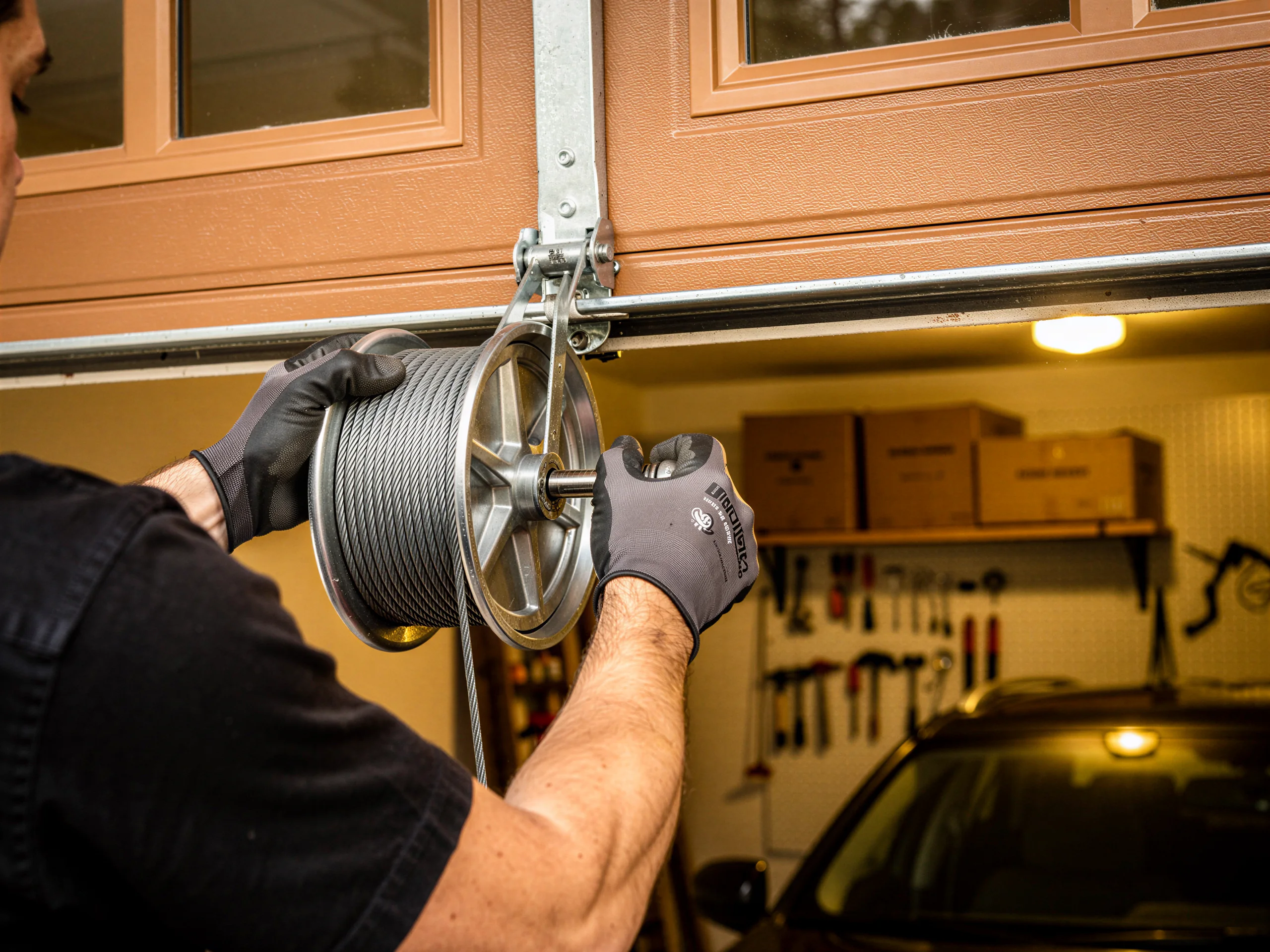
For doors still running original or near-original hardware from the 1960s-70s building wave, we carry extension springs in the common lengths and wire gauges from that era, along with the safety cables that should run through them and often don't anymore. We stock standard torsion springs and shafts for the doors that have already been converted or replaced, plus rollers, hinges, and cable in the sizes that fit both systems. What we don't keep on the truck is a match for every custom or imported door - if a panel was a specialty order when the house was built, we may need to order that piece rather than swap it same visit. We'll tell you straight if that's the case instead of forcing a part that's close but wrong.
Questions
No. We work out of Stamford, about 4 miles away, and drive to Old Greenwich for the job. There's no local branch or depot here - just a truck that comes from Stamford stocked for the hardware common in this area.
Houses built here around 1967 commonly used extension springs running along the horizontal track rather than a torsion bar centered over the door. That was standard hardware for the era. It still works fine when maintained, but the parts aren't what a newer installer stocks by default.
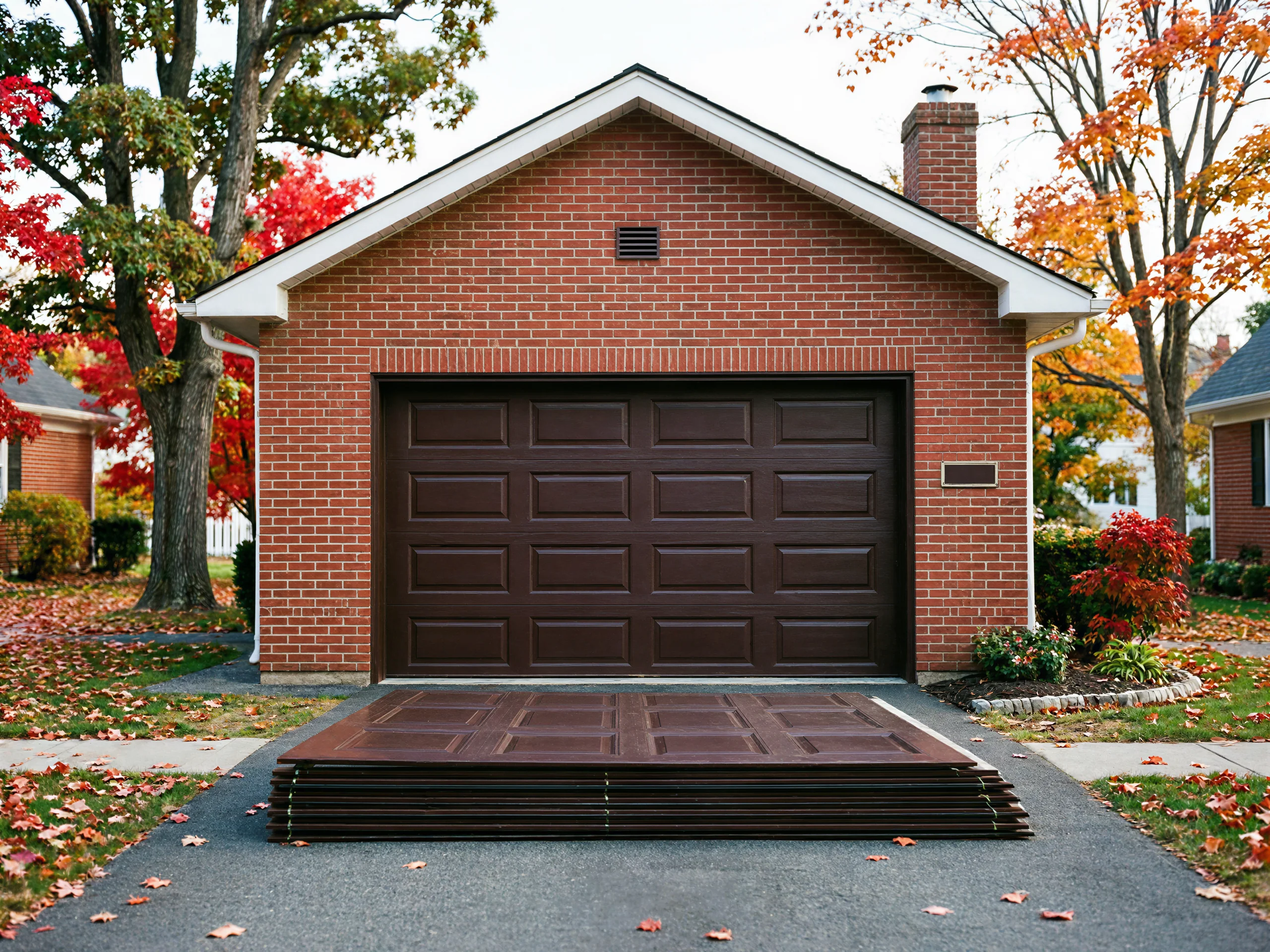
Depends on the panel, not just the age. If the steel is still sound and it's a spring, cable, or roller issue, repair almost always costs less than replacement. If the panels are dented, rusted through, or the track brackets have pulled loose from rotted framing, replacement starts making more sense.
Explore more
Ready when you are
Stamford Garage Door Pros repairs and installs garage doors, springs and openers in Stamford, CT and the surrounding area.