Fast garage door repair in StamfordCall (475) 203-3812

Old Greenwich, Stamford

Garage Door Service for Old Greenwich Homes

Old Greenwich sits 4 miles from our Stamford shop, a drive short enough to bring the right torsion springs and rollers for its 1960s-built doors on the first trip.

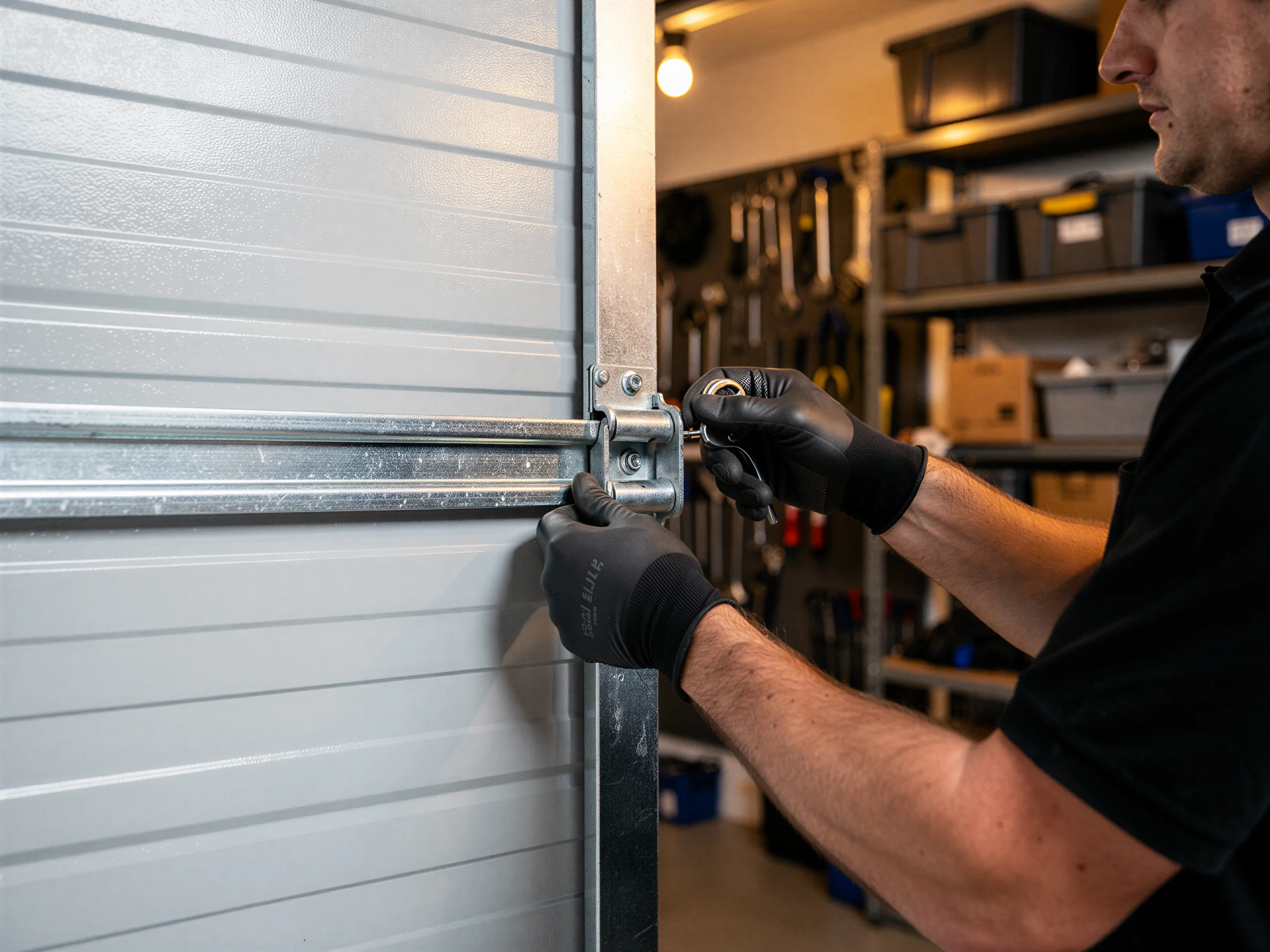
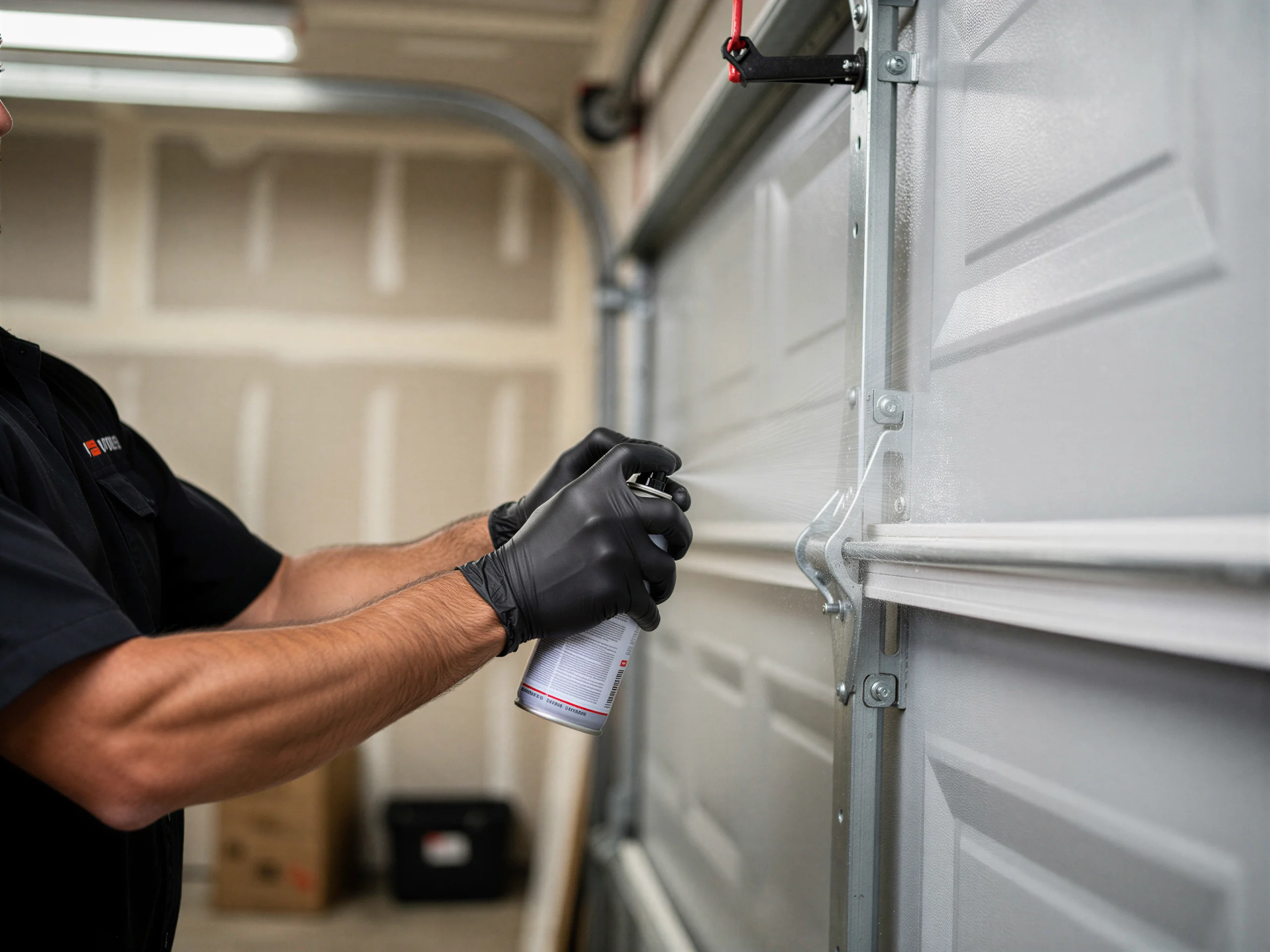
A technician in black gloves sprays lubricant on a white garage door hinge.
Serving Stamford, CTBackground-checked techsHonest, upfront pricingFast local response

Timing

How Long It Takes

Old Greenwich is four miles from our shop in Stamford, which is close enough that the drive itself isn't the bottleneck - figuring out what's actually wrong with the door before we leave is.

Symptom confirmation by phone

A broken spring or an opener that won't respond is a quick trip either way, but we'd rather spend five extra minutes on the phone confirming the symptom than show up with the wrong torsion spring size, because at four miles out there's no excuse for a second trip.

Truck stock preparation

Most homes in this part of town were built in the 1960s, so once we know the door is original or close to it, we already have a good guess at what's on the truck before we pull out of the lot.

Odd-width panel availability

If a part turns out to be unusual - an odd-width panel or obsolete hardware from that era - we tell you that up front rather than promise same-visit replacement we can't back up with what's on the shelf. Four miles doesn't buy you a dedicated branch here, it buys you a short enough drive that scheduling a job isn't the hard part. The hard part, same as anywhere, is diagnosing it right the first time.

The repair

What the Fix Involves

With a median build year of 1967 in Old Greenwich, we're mostly dealing with doors and track systems that have been replaced or upgraded at least once, but the framing and header behind them is original.

  1. Header tolerance for springs

    That matters for torsion spring work especially - older headers weren't always built to the same tolerances as what's gone in since, so setting a new spring to the right wind count sometimes takes more care than a cookie-cutter 1990s install would.

  2. Center bearing inspection

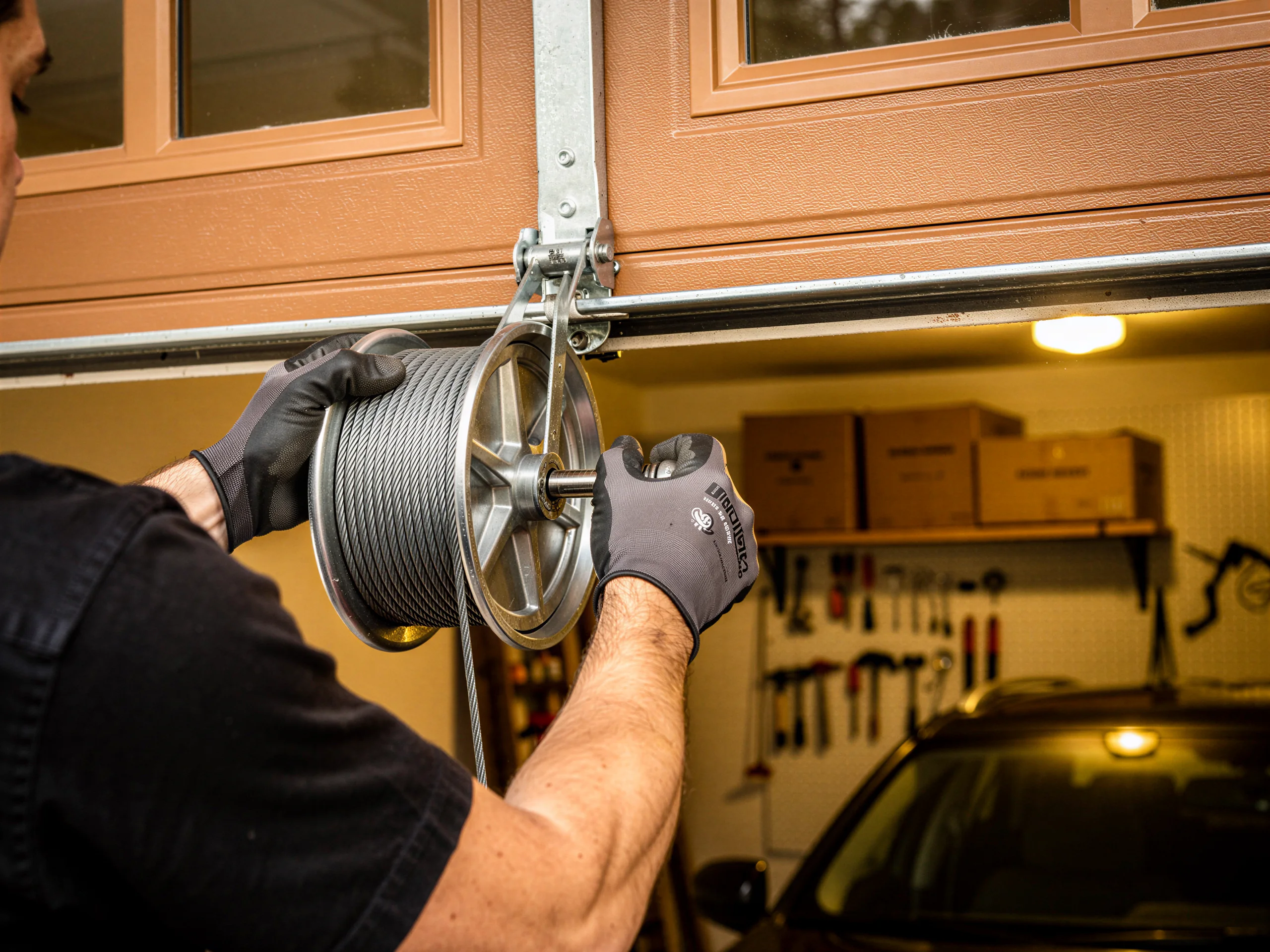
    A repair here usually means checking the drum, cable, and center bearing together rather than swapping one part in isolation, because if the house is original-era, odds are nothing's been touched since whatever the last owner did.

  3. Gear set and circuit board

    Opener repairs follow the same logic: we check the gear set and the circuit board before assuming it's a simple sensor alignment issue, since older openers in this housing stock tend to fail in the drivetrain, not the electronics. We're not guessing at what decade we're working with - a 1967 median build year tells us plainly.

DIY or pro

Doing It Yourself

A torsion spring is not a DIY repair, in Old Greenwich or anywhere - the spring is wound under enough tension to break bones, and that doesn't change by era or address.

Twice-yearly lubrication

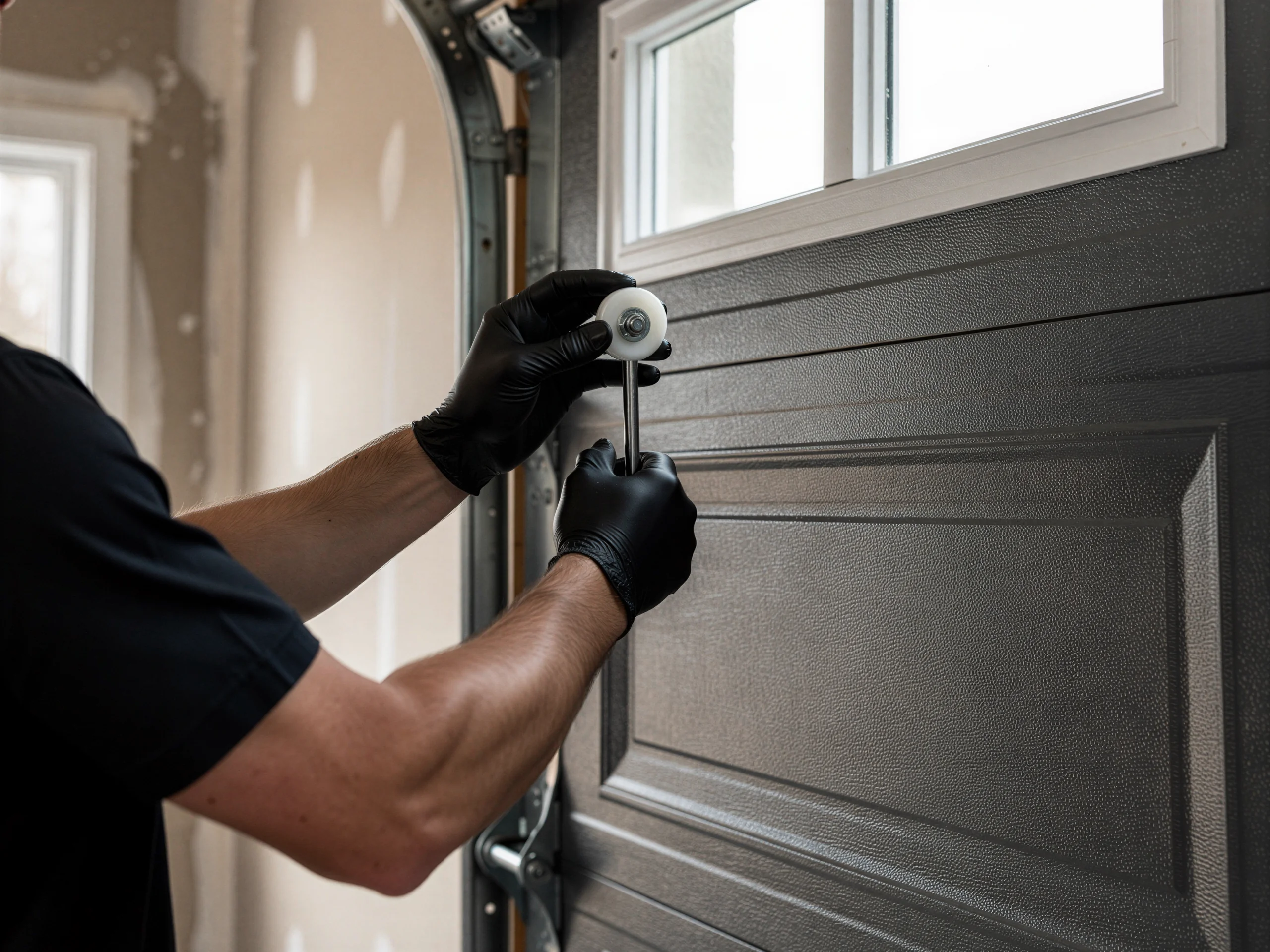
What you can do yourself: lubricate rollers and hinges twice a year, check that the photo-eye sensors are aligned and clean, and listen for new grinding or popping noises before they turn into a dead door.

Cold-stiffened lubricant cause

Given this area sits in a cold, severe winter climate zone, cold-stiffened lubricant is a common cause of an opener straining on a cold morning - that's a five-minute fix with the right silicone-based lubricant, not a service call.

Visible rust limit

Where I'd draw the line: if your door is original to a 1960s build and the track has visible rust or the bottom bracket looks bent, stop. Those brackets are under spring tension too, and a bent one that lets go while you're working on it is a hospital trip, not a repair job.

Pricing

What It Costs

We don't publish flat prices here because what a job costs depends on what's actually broken and what parts it takes, and that varies more in older housing stock than in a newer subdivision. What we can tell you: median household income in the Stamford service area is $183,112, and Old Greenwich itself runs well above that, around $250,001. That's relevant for one practical reason - in this income bracket, we see more owners opt to replace an aging door outright rather than keep patching a 1960s original, once a repair bill starts closing in on half the cost of a new door. We'll always give you the repair number first and let you decide. We won't push a replacement on you, but we also won't talk you out of one if the math says it's the better call.

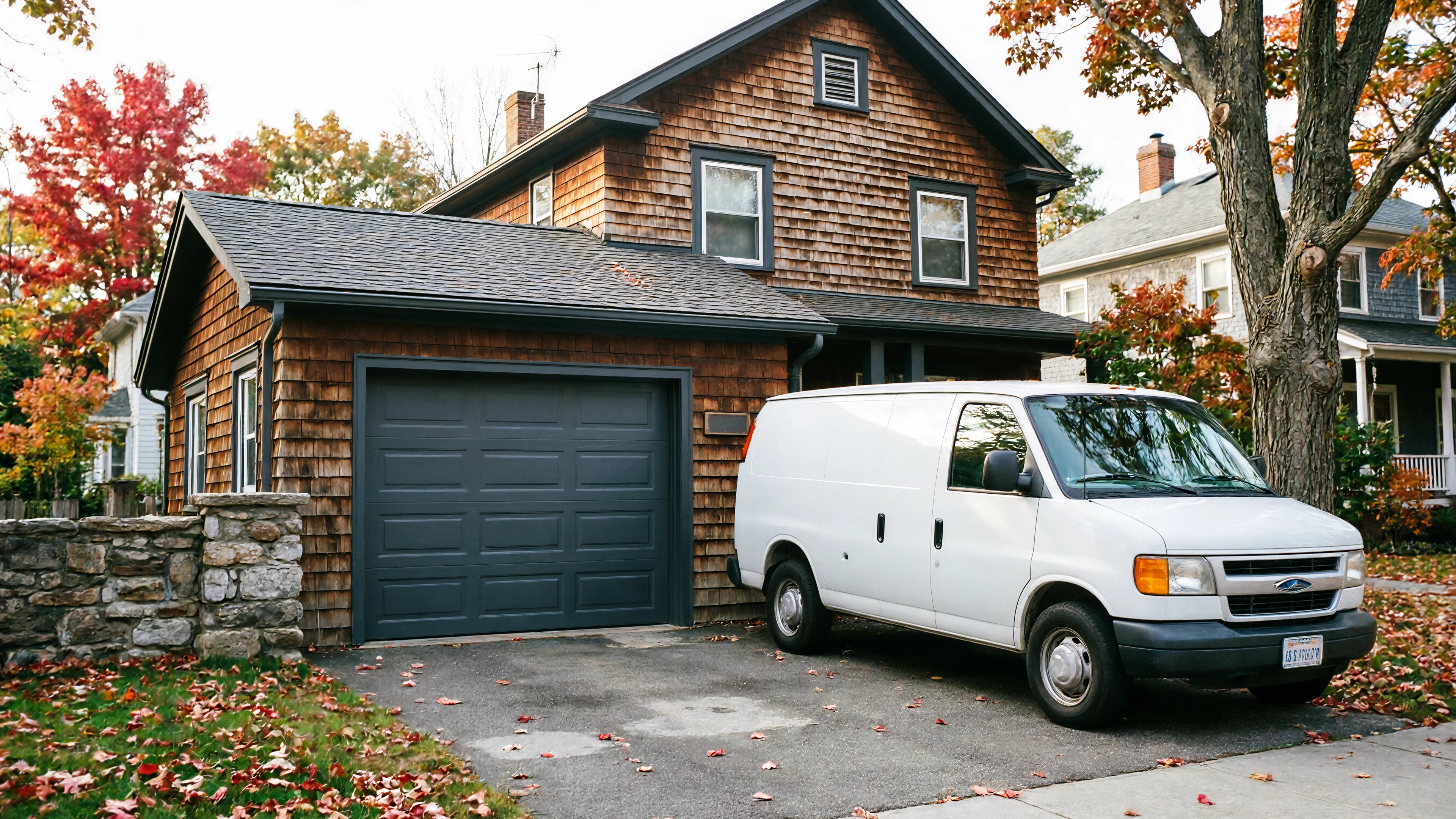
A white service van is parked in the driveway of a house with a dark gray garage door.

Warning signs

How It Shows Up

In a town built mostly between the mid-1950s and mid-1980s, with Old Greenwich's own homes centered around 1967, the most common failure we see isn't a dead opener - it's a spring that's simply outlived its wind count, snapping without warning on a door that's opened and closed tens of thousands of times since the Johnson administration.

Settling-related track misalignment

The second most common: a track that's slowly bent out of alignment over decades of settling, which shows up as a door that binds or grinds a few inches before the top.

Winter-accelerated failure timing

Cold, severe winters don't cause these failures, but they accelerate them - metal fatigue moves faster through temperature swings, and a spring that was already near the end of its life tends to go in January, not July. None of this is unique to one street or one house; it's what you'd expect from housing this age in a climate this cold.

On the truck

Parts We Carry

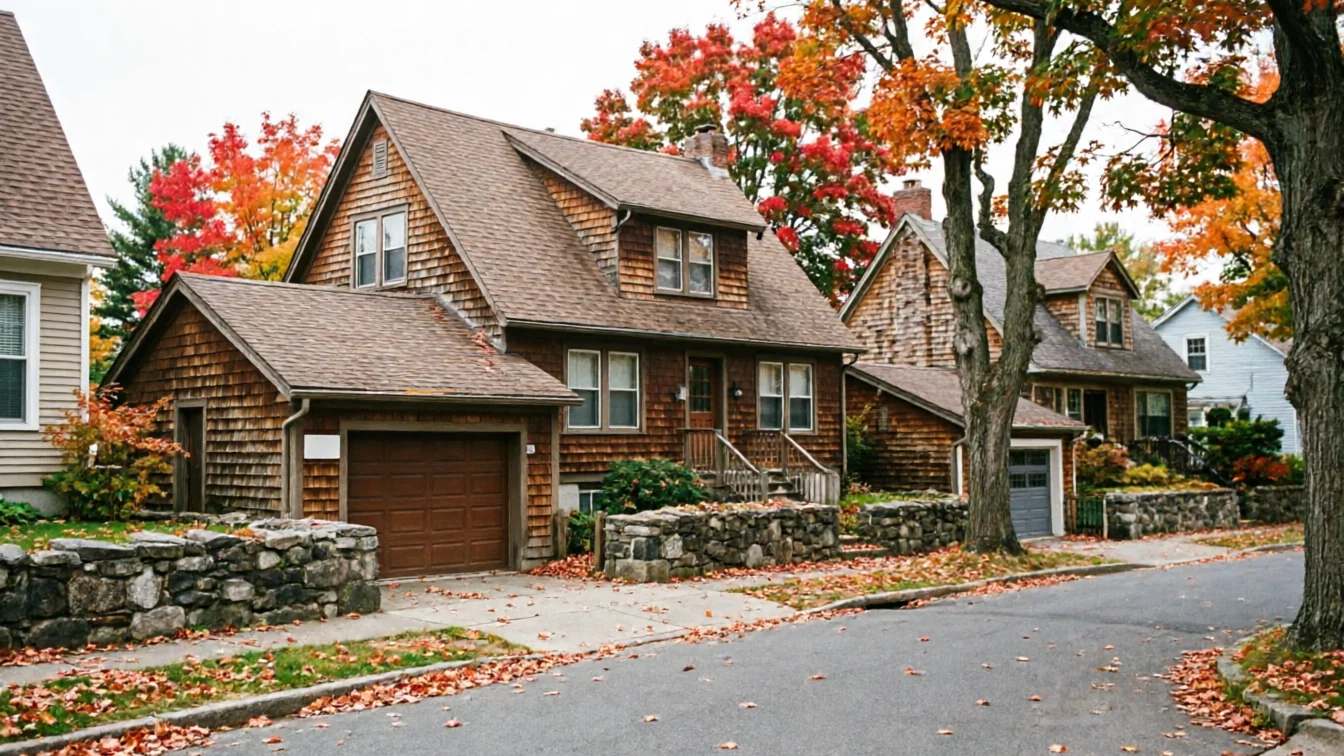
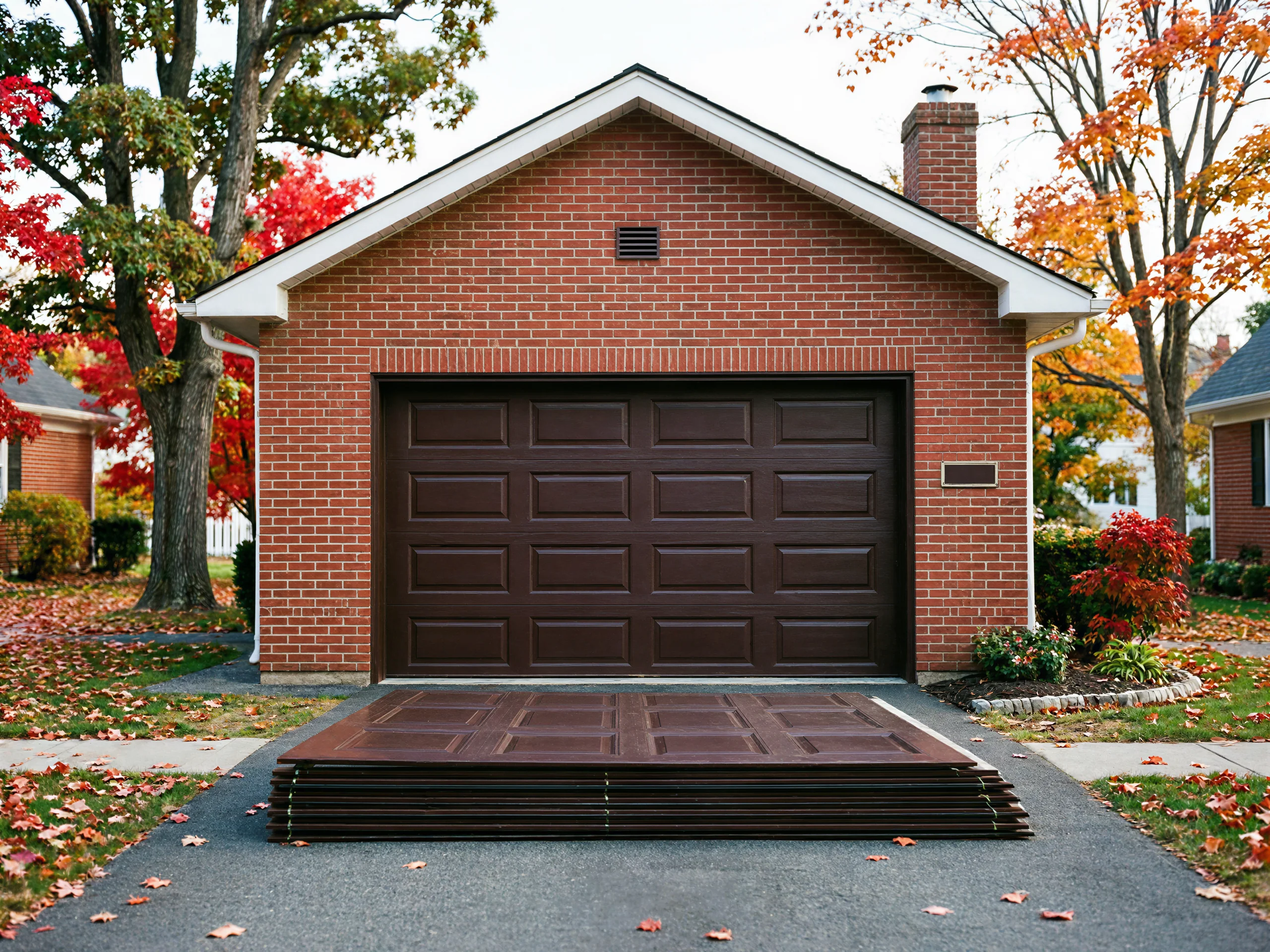
A brown house with a brown garage door and autumn leaves on the ground.

We stock torsion springs in the sizes that match 1960s-70s residential doors, along with standard rollers, cables, and center bearings - the parts that fail most often in housing from this era. What we don't always carry on the truck: panels or sections for doors that were custom-ordered decades ago, since manufacturers don't keep every old profile in production. If your door needs a specific obsolete panel, that's a lead-time item, not a same-visit fix, and we'll tell you that honestly instead of promising a part we don't have. For openers, we carry common gear kits and circuit boards that cover most of what fails in older drivetrains. The short drive from Stamford means we can come back quickly once a special-order part arrives - we just can't pretend every part for a 55-year-old door is sitting on the shelf, because it usually isn't.

Questions

Common questions

How far is Old Greenwich from your shop in Stamford?

About four miles. It's a short enough drive that scheduling isn't the issue - getting the diagnosis right before we leave is what saves you a second trip. We don't have a branch in Old Greenwich itself; every job here is dispatched from Stamford.

Are garage doors in Old Greenwich mostly original?

Many are from the 1960s era when most of the area was built, though plenty have been upgraded since. We check the header and track condition first, because even a newer door bolted onto a 1960s frame can behave differently than one installed in a house built to current code.

Why does cold weather matter for an older garage door here?

The area sits in a cold, severe winter climate zone, and cold-stiffened lubricant or metal fatigue in an aging spring tends to cause failures to show up in winter rather than summer. It's not the cold causing the problem outright - it's accelerating wear that was already there.

Should I repair or replace an original 1960s door?

It depends on the repair cost versus a new door's price. We'll always quote the repair first. If the bill starts approaching half of what a replacement costs, we'll say so plainly, but the decision is yours to make, not ours to push.

Ready when you are

Need a garage door sorted in Stamford?

Stamford Garage Door Pros repairs and installs garage doors, springs and openers in Stamford, CT and the surrounding area.

CallGet a quote