
Adapter plate for widths
That earlier build date matters because panels from that run came in track widths and hinge spacings that current steel sections don't always match without an adapter plate.
Riverside, Stamford
Panel damaged or dented on a Riverside, CT garage door? We match steel sections to this area's 1960s stock and reset spring tension for the new weight.
Popular Services
Timing
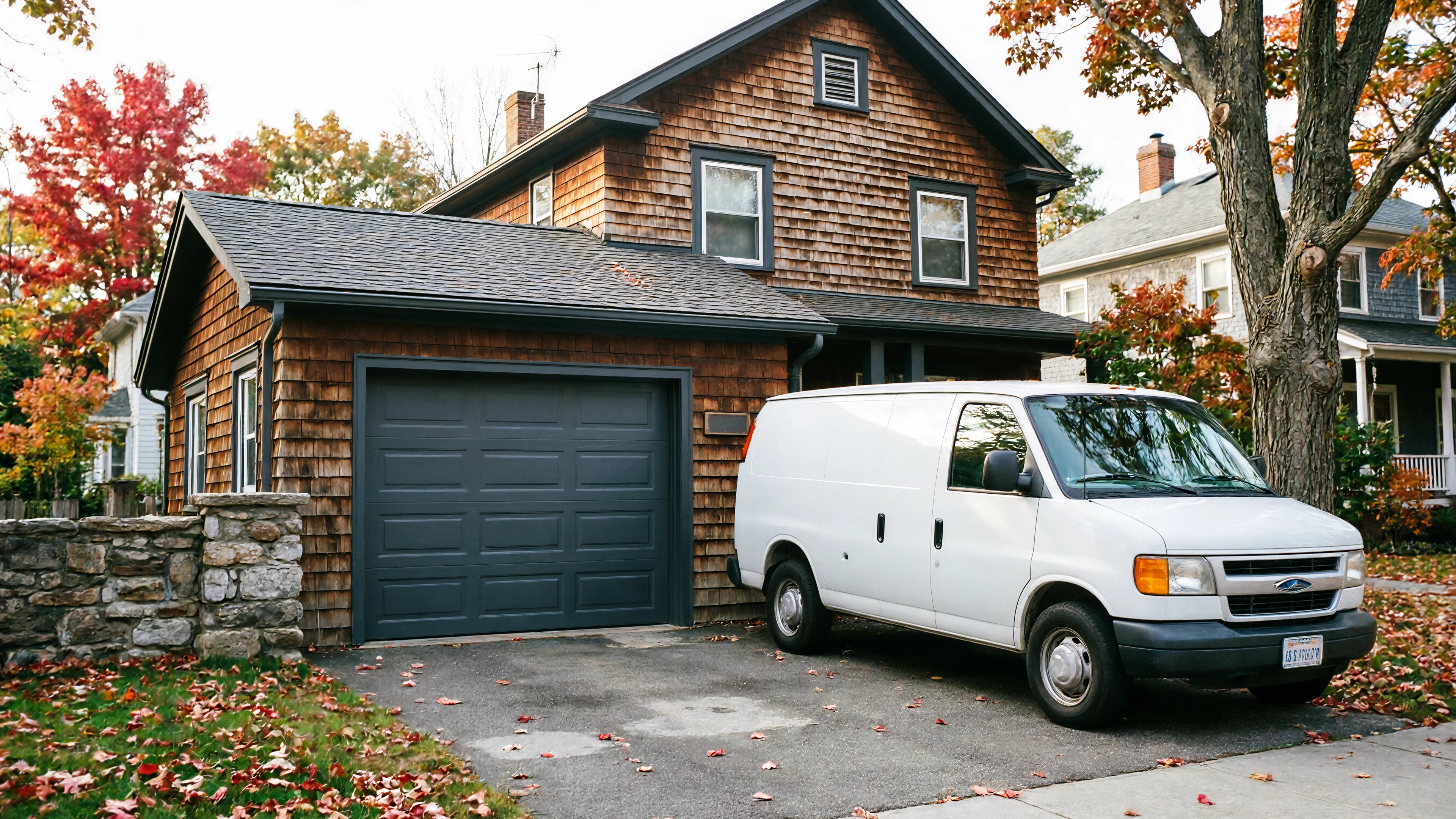
Most panel jobs in Riverside start with houses built around 1963, a few years ahead of the 1968 median across the rest of the Stamford service area.
That earlier build date matters because panels from that run came in track widths and hinge spacings that current steel sections don't always match without an adapter plate.
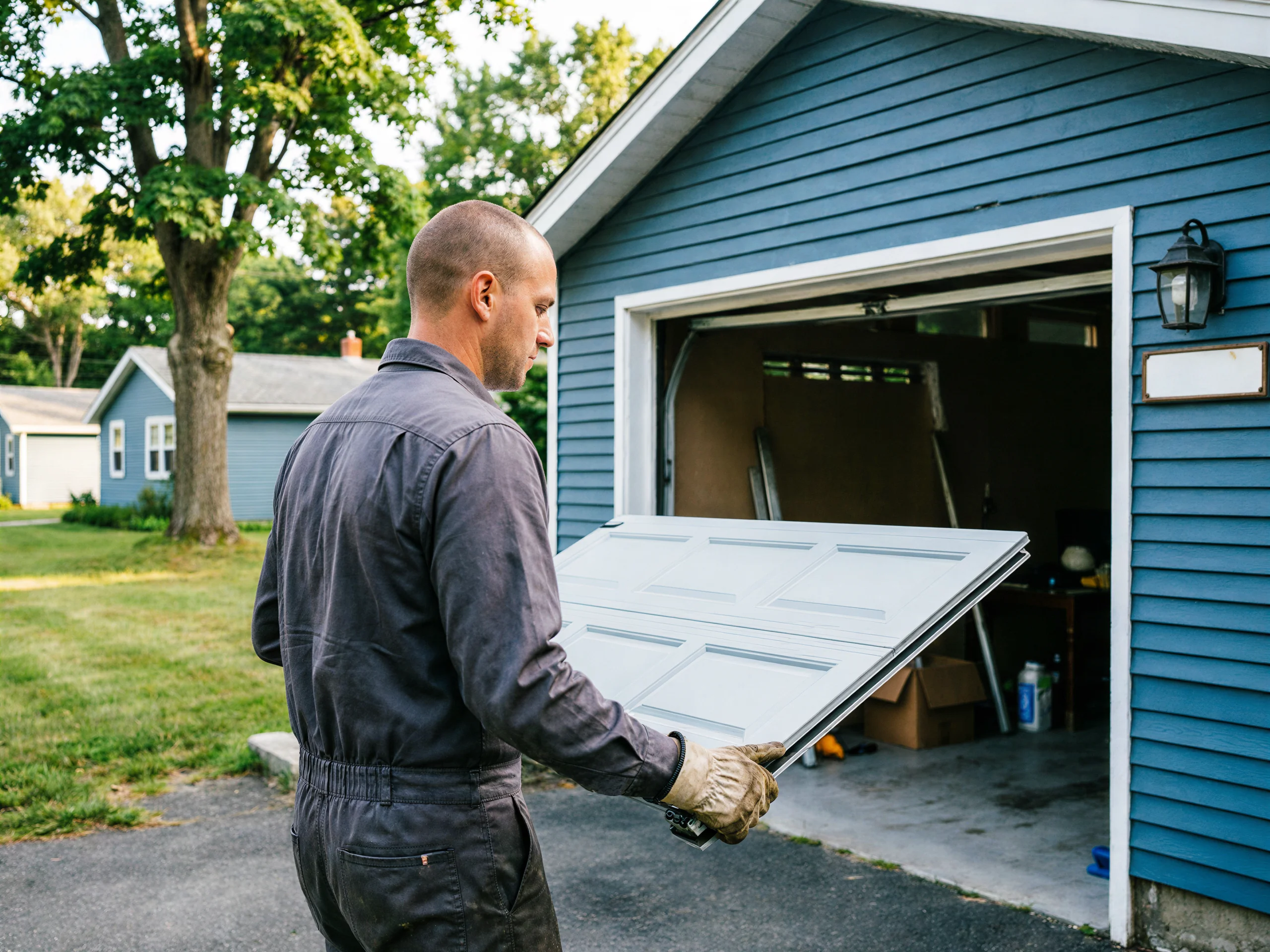
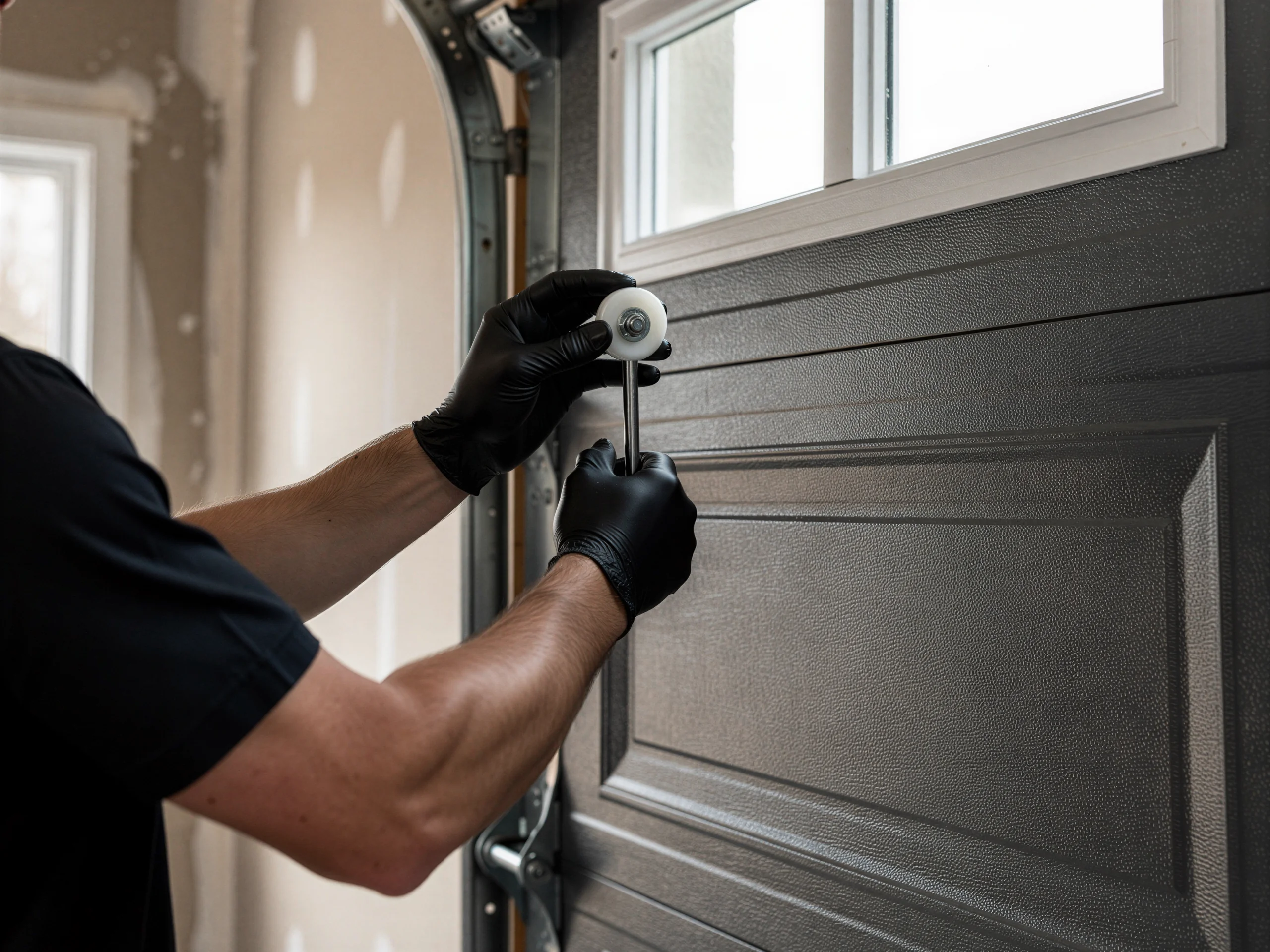
A single panel swap, once we've got the right section on the truck, runs two to three hours door to door - remove the damaged panel, re-hang the track if it's bent, match hinge spacing, and cycle the door a dozen times to check travel.
A full double-door panel set, common on this side of town, takes closer to half a day, because every hinge and roller on the stack has to come off and go back on in the right order. What we can't shorten is sourcing: if the panel profile isn't something we stock, that's a lead-time conversation before we touch the door.
Booking
We run this job out of Stamford, about four miles from Riverside, so there's no separate branch or drop-in counter here - every booking starts with a call and a description of what's damaged: dented panel, cracked panel, water-rotted bottom section, or a whole side knocked loose.
Because panel stock has to be pulled and checked against your door's track width before the truck leaves, we ask for a photo of the damage and, if you can find it, the sticker inside the door that lists the model and section height.
That single step cuts a second trip down to almost none. We don't carry every panel profile on every truck, so if your door is a less common width we may need a day to confirm the part before we give a firm date.
Riverside's stock sits mostly in the 1955-to-1984 build range that defines the wider service area, which means most of what we see here is one of a handful of known profiles - but not all of it.
The repair
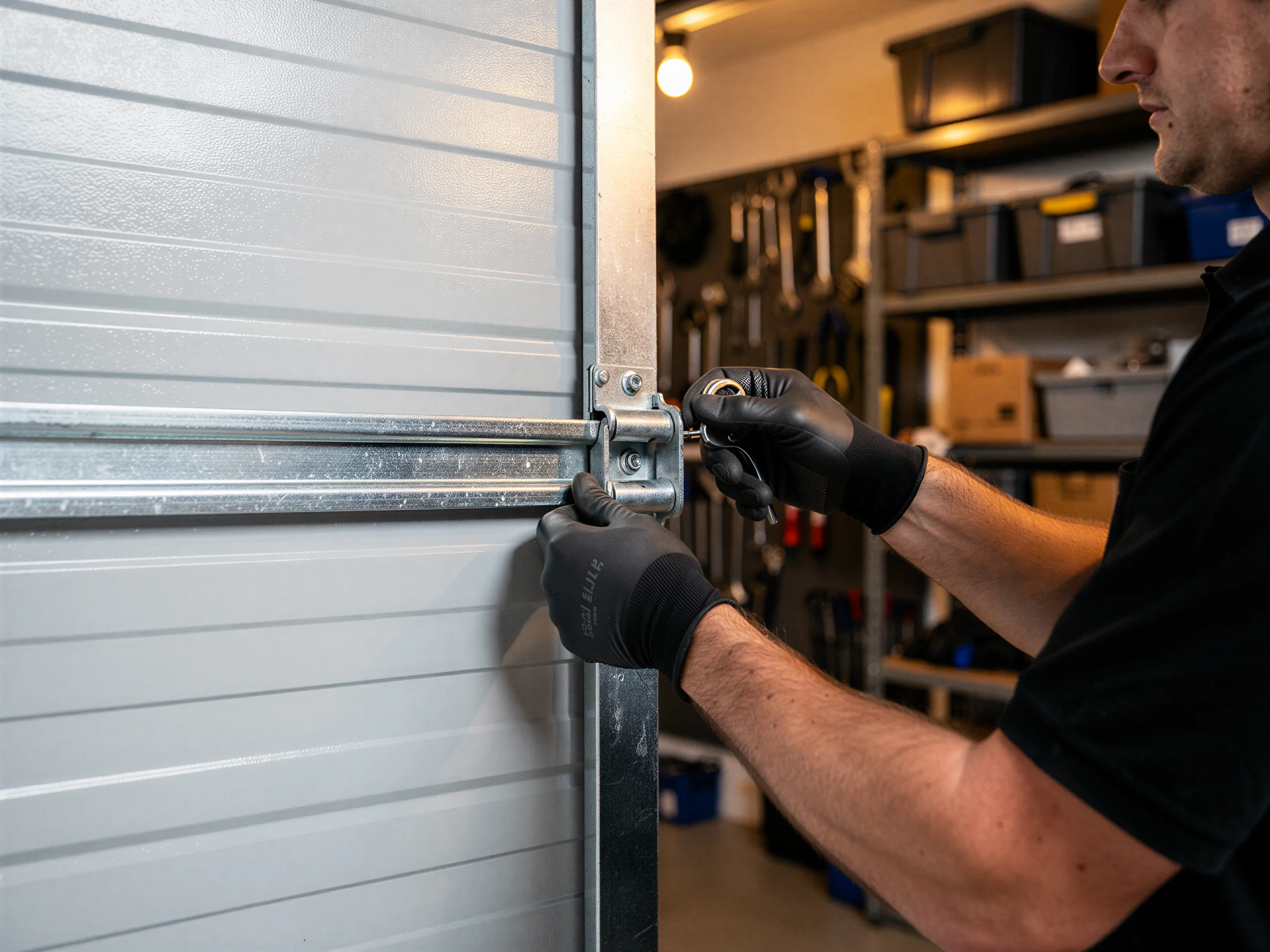
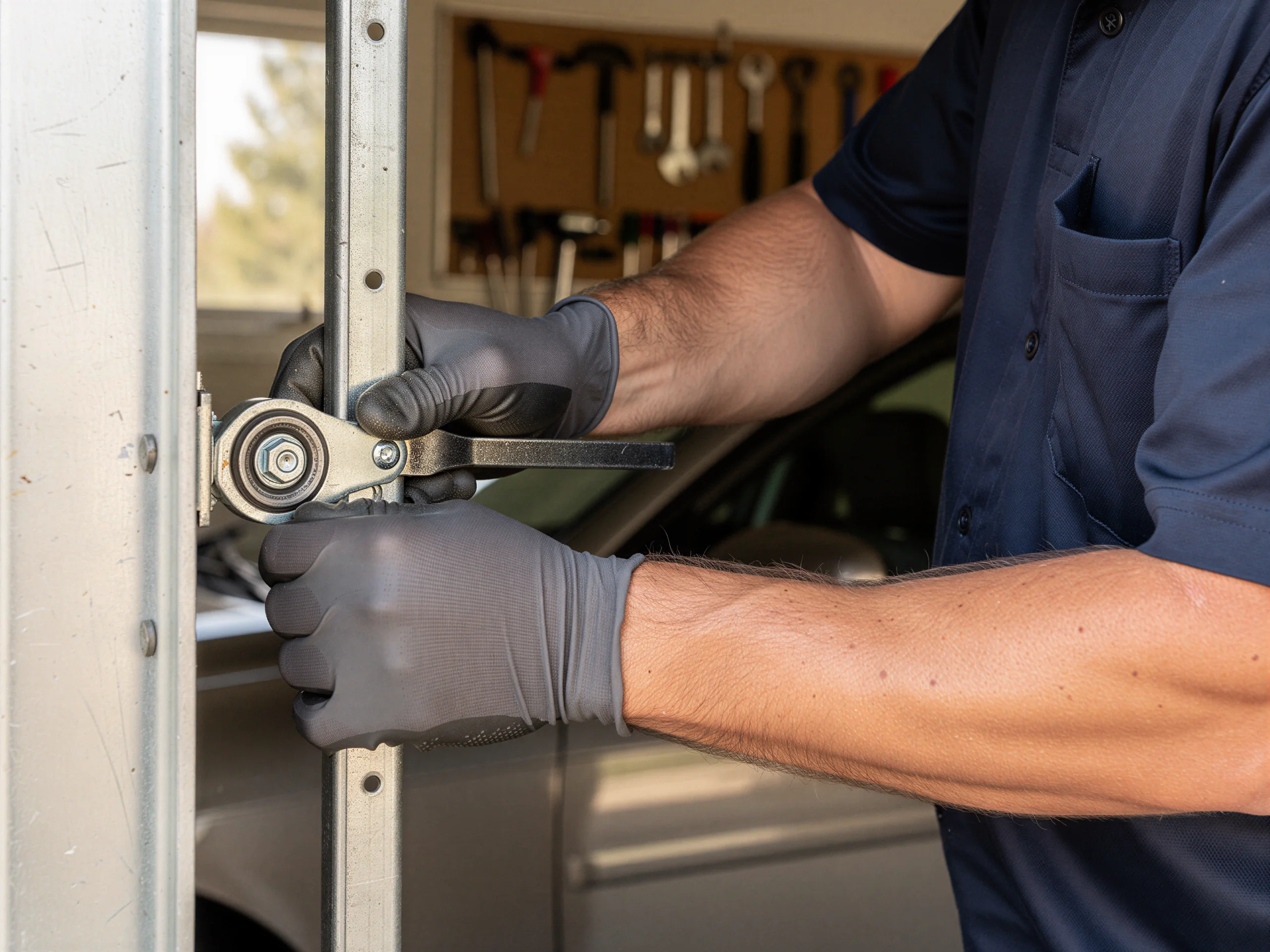
A damaged panel rarely sits in isolation. Pull it off and you're also looking at the hinges it was bolted to, the roller brackets on either side, and whatever track section took the hit.
On a door this age, those parts have usually never been replaced, so the steel is thinner than what ships today and the roller stems have worn oval instead of round. We match the new panel to the door's existing color and ribbing as closely as available stock allows - on houses built this long ago, an exact factory match often isn't possible, and we say so before we order anything.
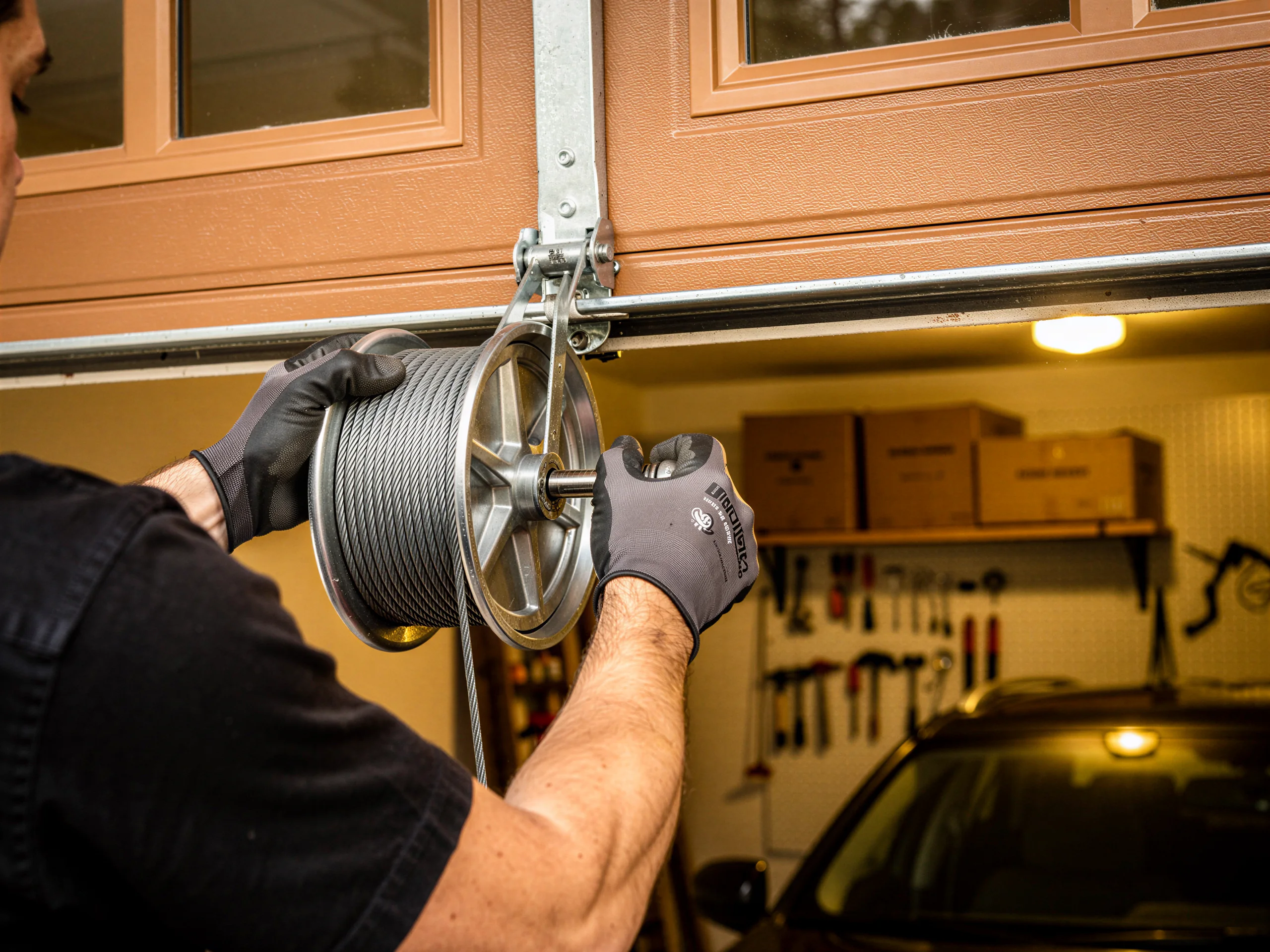
Once the panel's in, we reset spring tension: swapping even one section changes the door's total weight, and a torsion spring sized for the old balance will either fight the opener or let the door drop.
Given winters in this part of Connecticut run cold enough to stiffen grease and shrink seals, we also check the astragal and weatherstrip on the repaired section while it's apart, since a bowed bottom seal is often what split the panel in the first place.
On the truck
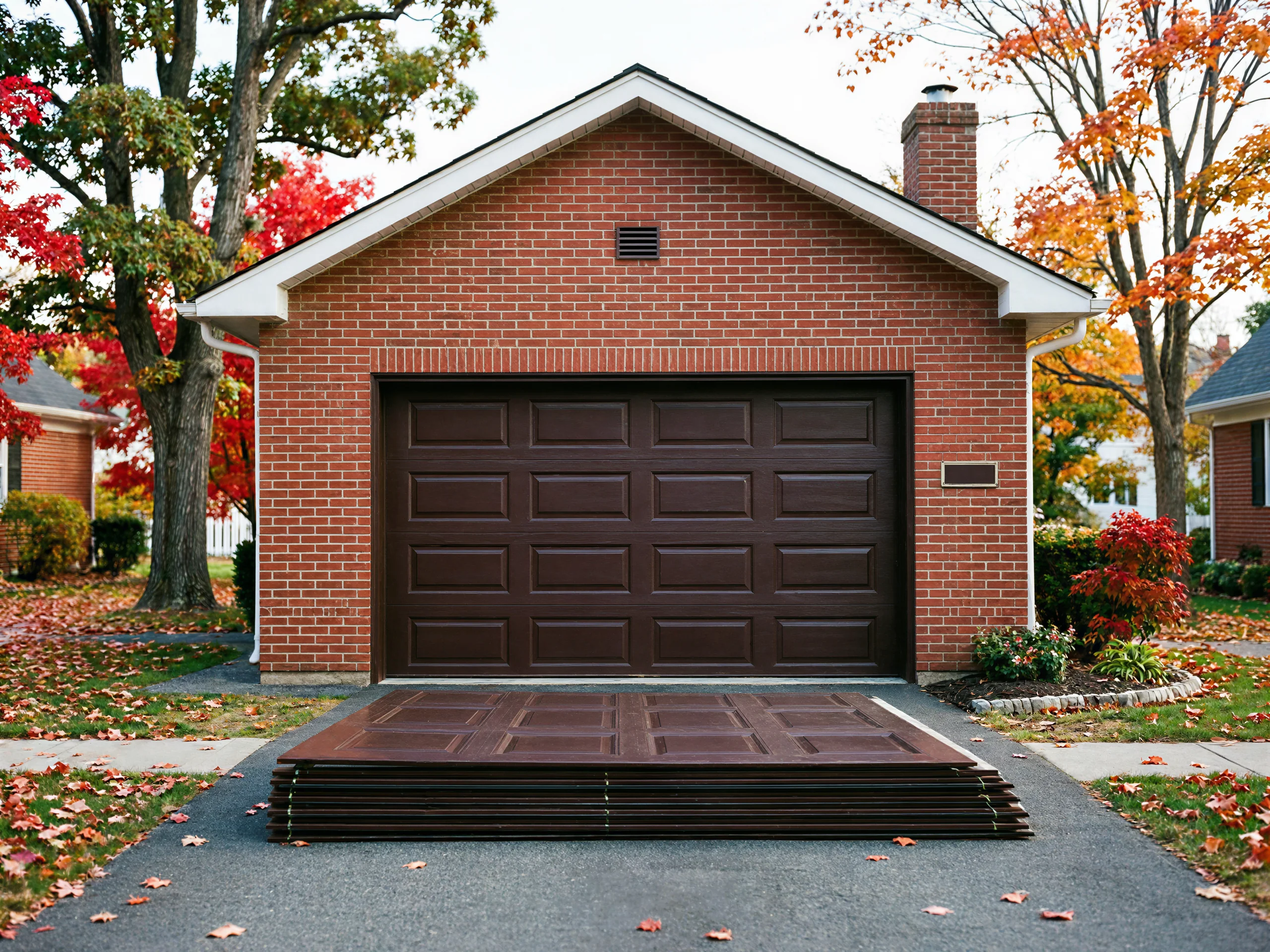
We stock steel panel sections in the common residential widths, both insulated and non-insulated, because a door built in the 1960s or '70s often has no insulation at all and an owner replacing one panel may want to upgrade that section's R-value even if the rest of the door stays original. Given this service area sits in a climate zone that calls for real winter protection, insulated replacement sections make sense on doors that face the weather side of the house, even as a partial upgrade. What we don't stock is every discontinued profile from every manufacturer that built doors fifty-plus years ago - some of those sections aren't made anymore, and on those jobs the honest answer is a close match, not an exact one, or a conversation about whether it's time to replace the whole door instead of chasing one more panel for it.
DIY or pro
Swapping a single garage door panel looks straightforward from a video, and on some doors it is - four bolts, a hinge, done.
Where it goes wrong is the spring. Pull a panel on a door with the spring still fully wound and you're working next to several hundred pounds of stored tension with nothing holding it back if a cable slips. We don't recommend the spring-adjacent part of this job as a weekend project, full stop.
What's reasonable to do yourself: ordering touch-up paint to match a scuffed panel, replacing a cracked bottom weatherseal, or tightening loose hinge screws on a panel that isn't actually bent. If the panel is dented, split, or the track has pulled away from the wall, that's a call, not a project.
Watch-outs
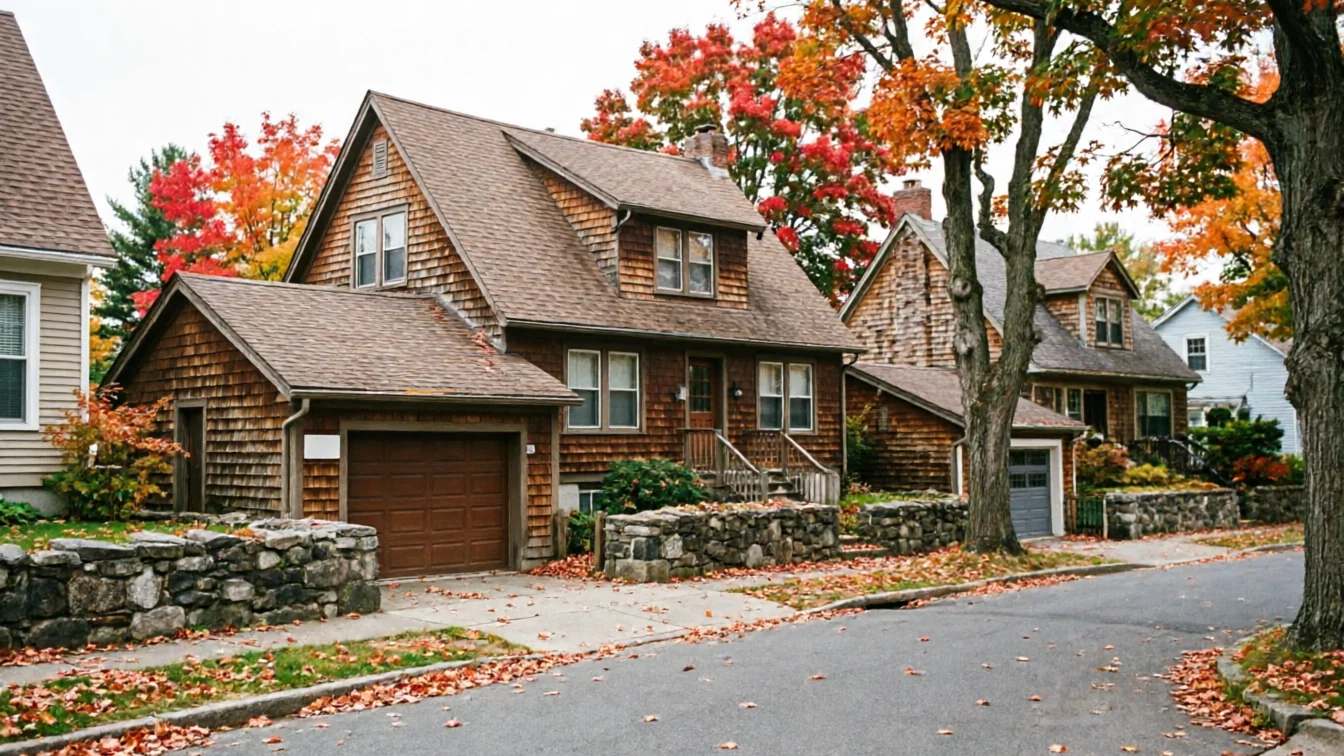
The job that looked like one panel sometimes turns into a longer one once the door's apart. On houses from this era, we'll pull a damaged panel and find the track behind it bowed from years of a slightly misaligned roller, or a hinge that's cracked and holding on by one bolt for who knows how long. With roughly 3,014 households in Riverside and most of that stock dating to the early '60s, this isn't rare - it's closer to the usual finding on anything that hasn't had a hinge replaced since it left the factory. The other place this goes sideways is cost logic. Riverside's median household income runs well above the broader service area's, and on a door where we're matching panels, replacing bent track, and resetting springs all in one visit, some owners decide a full door replacement pencils out better than three repairs stacked on an old frame. We'll tell you straight which side of that line your door is on before you commit to parts.
Questions
Usually close, not exact. Doors from the 1960s and '70s used paint and ribbing profiles that have shifted over decades of manufacturing, so a single replacement panel often reads as a slightly different shade or texture next to the originals. We'll show you the closest stock match before ordering so there are no surprises on install day.
Not always. If the track, hinges, and spring balance are sound, a single panel swap is the cheaper fix. But if the panel damage exposed bowed track or cracked hinges underneath, repairing those plus one panel can cost close to what a full door runs, and that's worth weighing honestly rather than assuming repair is always cheaper.
Riverside sits about four miles from our Stamford base, so every visit here is a scheduled trip, not a drop-in stop. We don't keep a separate branch or counter in Riverside itself - booking starts with a call describing the damage.
Explore more
Ready when you are
Stamford Garage Door Pros repairs and installs garage doors, springs and openers in Stamford, CT and the surrounding area.