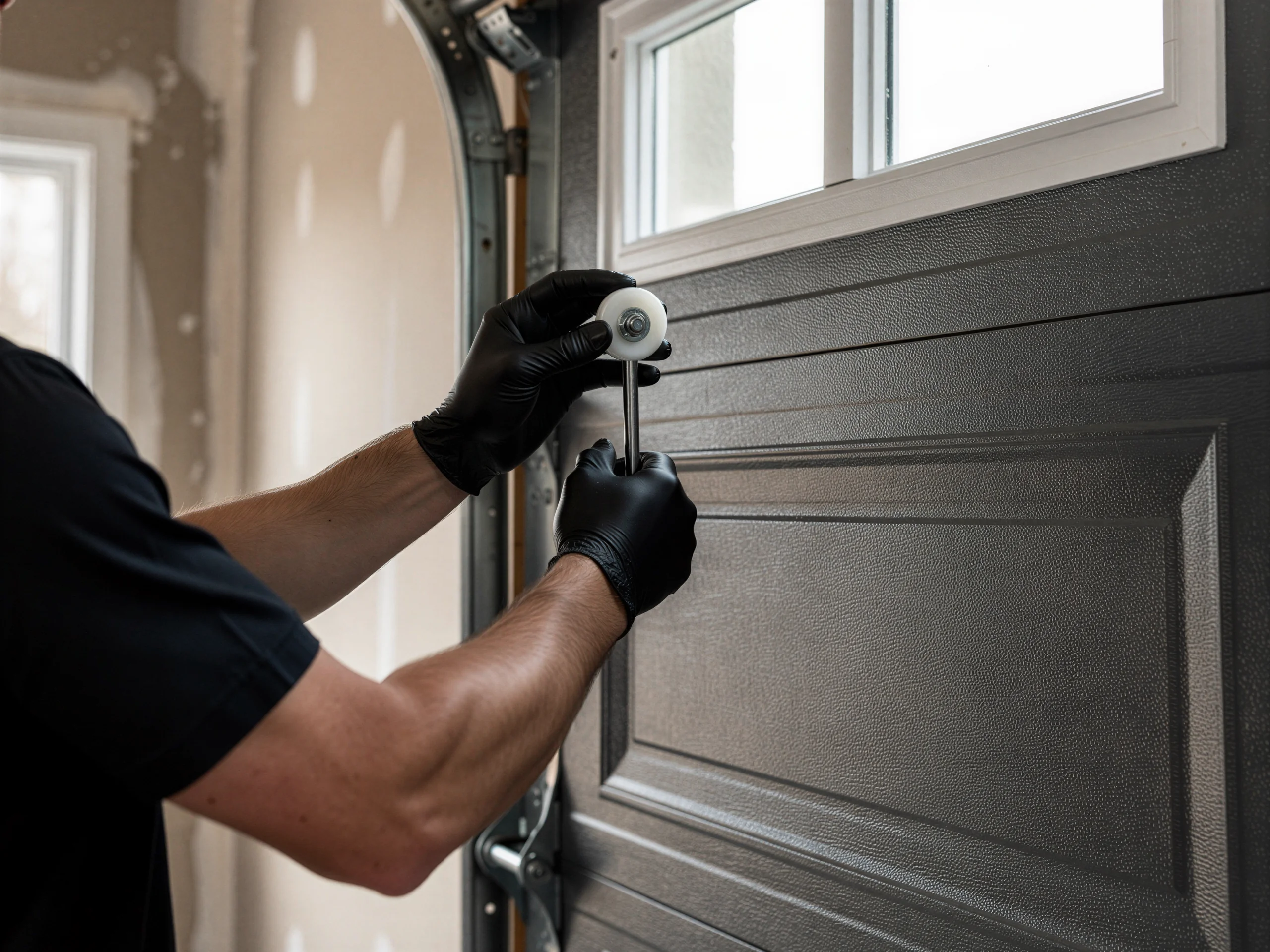
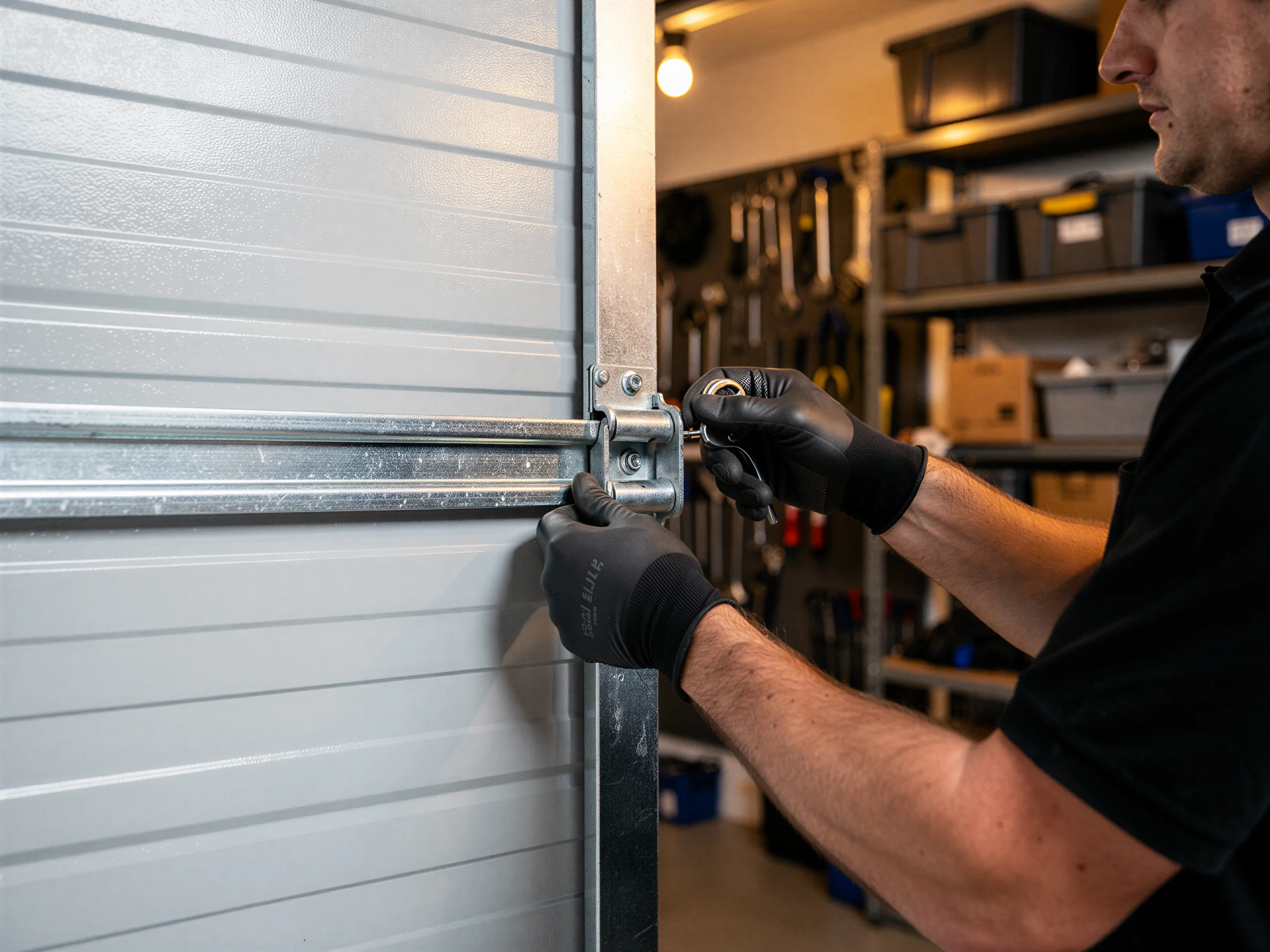
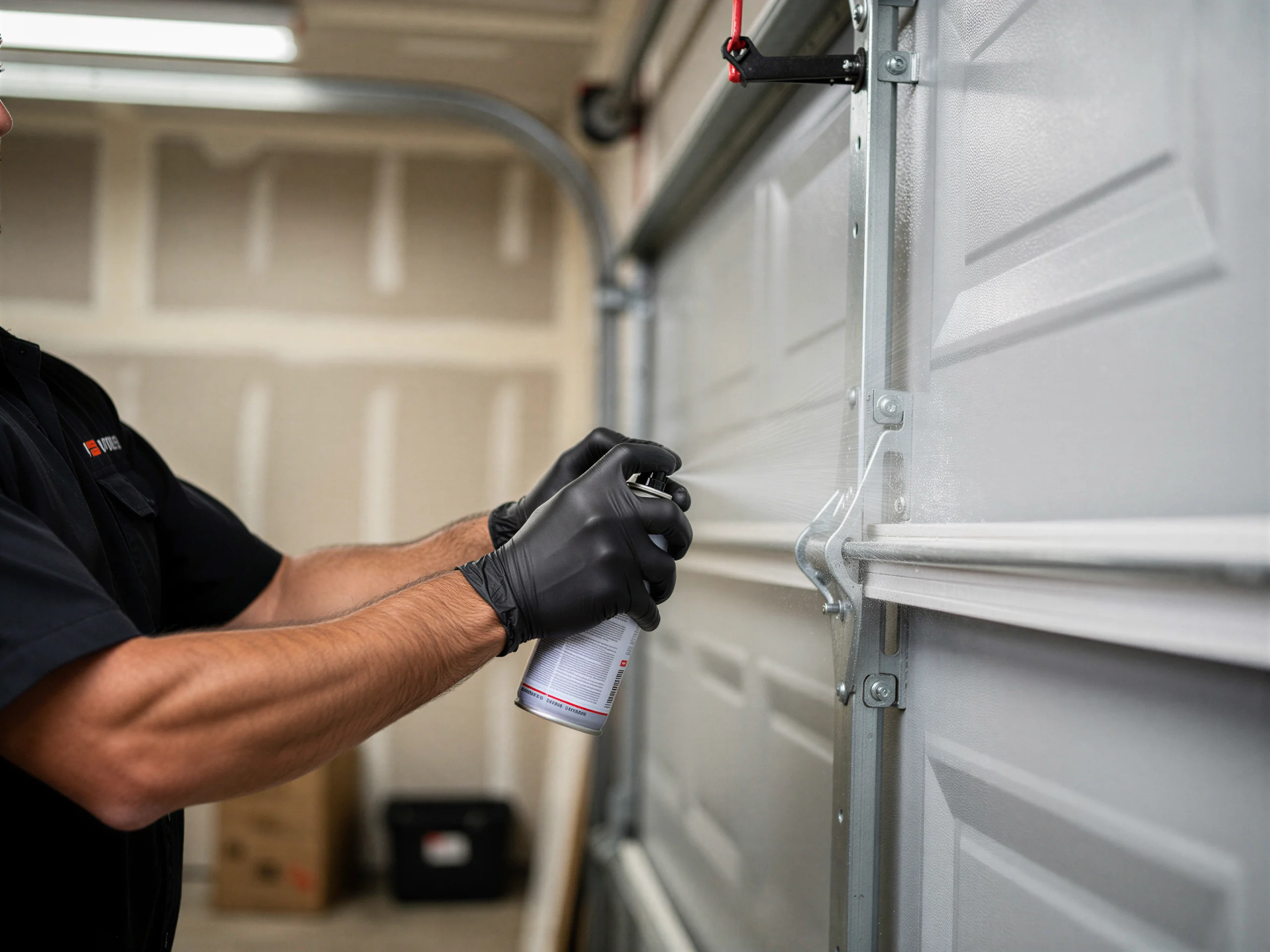
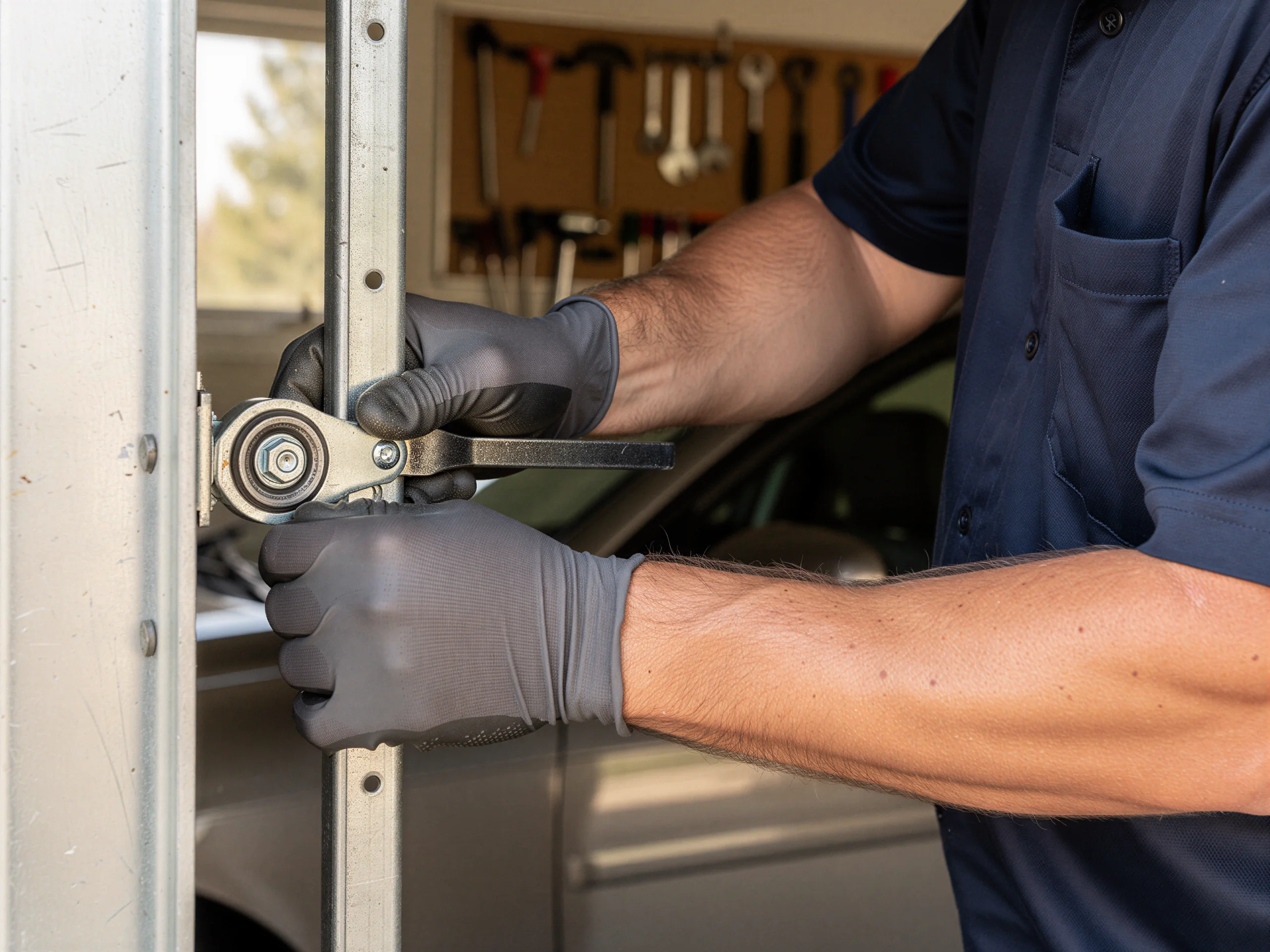
The climate band here is classified cold and severe, and that's the piece that actually drives roller failure on a 1968-built door faster than age alone would. Steel rollers with an open bushing lose their lubricant to cold and damp over a winter, and by spring they're dry and squealing. Nylon rollers crack instead of wearing smooth when the bearing housing gets brittle in a hard freeze, so a roller that looked fine in October can shatter by January.
On a door this old, the rollers are also carrying more load than they were designed for if the panels have sagged even slightly over fifty-plus years, which is common. A worn roller on a sagging panel accelerates wear on the roller next to it, so by the time one side of the door is loud, the other side usually isn't far behind - even if it sounds fine today.